
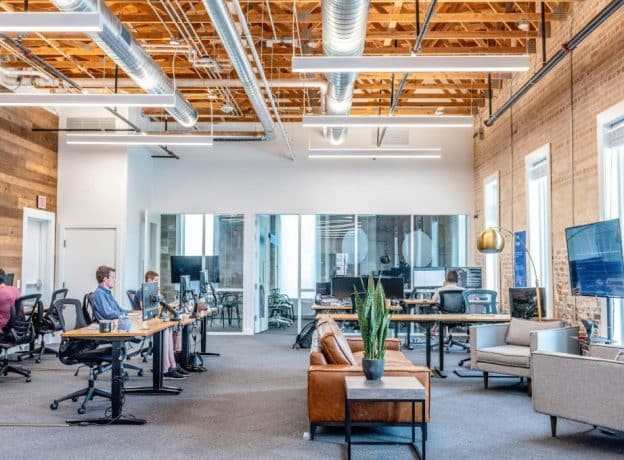
Australian businesses are fundamentally rethinking how they approach workspace creation and configuration.
The traditional model of lengthy construction timelines and permanent, inflexible layouts no longer serves the dynamic needs of modern organisations.
This shift has sparked innovation across the entire commercial building industry. From how structures are manufactured and delivered to how interior spaces are divided and optimised, new approaches are transforming what’s possible for businesses seeking functional, adaptable environments.
Understanding these innovations helps business owners make informed decisions about their workspace investments.
The combination of advanced construction methods with intelligent interior solutions creates opportunities for environments that truly support organisational success.
The Evolution of Commercial Workspace Thinking
For decades, commercial workspaces followed a predictable pattern: lengthy planning phases, extended construction periods, and fixed layouts that remained unchanged for years. This approach made sense when business operations were equally static and predictable.
Today’s business environment demands something different entirely. Companies scale rapidly, pivot their operations, and respond to market changes in ways that require their physical environments to keep pace.
The workspace itself has become a strategic asset rather than simply a cost centre. Organisations recognise that well-designed environments directly impact employee productivity, client perceptions, and operational efficiency.
This recognition drives demand for building and fit-out solutions that deliver quality without the traditional timelines. Businesses need spaces ready in weeks rather than months, with the flexibility to adapt as circumstances change.
Prefabricated Construction: Speed Without Compromise
The construction industry has responded to these demands with sophisticated prefabrication and modular building techniques.
These methods shift much of the construction process from chaotic job sites to controlled factory environments.
Modular office buildings represent the pinnacle of this approach, delivering complete workspace solutions manufactured off-site and assembled rapidly at their final locations.
Companies like Froth Build in Queensland have refined this process to deliver customized offices across Australia with remarkable speed and consistency.
The manufacturing process ensures quality control, impossible to achieve with traditional construction methods.
Every component is built to precise specifications under controlled conditions, eliminating weather delays and site-related complications.
This approach dramatically compresses project timelines. What might take six months or longer with conventional construction can be operational within weeks using modular methods, allowing businesses to occupy their new spaces faster.
The buildings themselves are engineered to Australian Standards and designed for the specific conditions they’ll face.
From executive suites to open-plan layouts, these structures accommodate virtually any office configuration a business might require.
Portability adds another dimension of value for certain applications. If business needs change or operations relocate, modular structures can move with the organization rather than becoming stranded assets.
Why Traditional Construction Falls Short
Conventional building methods carry inherent limitations that modular approaches address directly.
Site construction involves countless variables, such as weather conditions, subcontractor coordination, and material delivery timing, that create schedule uncertainty.
Cost overruns plague traditional projects with depressing regularity. Unexpected site conditions, design changes during construction, and coordination failures between trades all contribute to budgets spiraling beyond original estimates.
Quality consistency presents another challenge in conventional construction. Different crews, varying conditions, and the pressures of site work can produce inconsistent results even within a single project.
The disruption factor affects businesses operating adjacent to construction sites. Noise, dust, safety concerns, and access restrictions impact productivity for months during traditional building projects.
Modular construction addresses each of these limitations through its fundamental approach. Factory production eliminates weather variables, centralized management ensures consistency, and on-site work is minimized to final assembly and connection.
From Shell to Functional Workspace
A building structure, whether modular or conventional, provides only the shell within which productive work happens. Transforming that shell into a functional workspace requires thoughtful interior configuration that supports how people actually work.
This is where internal partitioning becomes essential to workspace success. The ability to divide open spaces into purposeful zones directly impacts how effectively teams collaborate, concentrate, and communicate.
Modern businesses require diverse space types within their offices. Private offices for focused work, collaborative areas for team projects, meeting rooms for client interactions, and breakout spaces for informal conversations all serve different but essential functions.
Achieving this variety within a single building envelope demands flexible partitioning solutions. A skilled partition contractor in Melbourne, like Mallaby Fitouts, can transform open floors into precisely configured environments that support specific business operations.
The partitioning approach chosen affects more than just visual separation. Acoustic performance, natural light distribution, and the sense of spaciousness all depend on how interior divisions are designed and installed.
Glass partitions have become increasingly popular for their ability to maintain visual openness while providing sound separation.
They allow natural light to penetrate deeper into floor plates while still creating distinct zones for different activities.
Solid partitions offer maximum privacy and acoustic isolation for spaces where confidentiality matters. Executive offices, HR consultation rooms, and client meeting areas often benefit from this approach.
Demountable systems provide future flexibility, allowing layouts to evolve as organisational needs change.
Rather than demolishing and rebuilding, these systems can be reconfigured with minimal disruption and cost.
Matching Interior Solutions to Business Needs
Every business operates differently, and interior configurations should reflect these operational realities. A law firm requires different spatial arrangements than a creative agency or a technology startup.
Understanding workflow patterns helps determine optimal partitioning strategies. How do teams interact? Where does focused individual work happen? How frequently do client visits occur? These questions inform smart partition placement.
Acoustic requirements vary dramatically across different business types. Call centers need substantial sound absorption, while quiet professional offices might prioritize visual privacy over acoustic separation.
Growth projections should influence partition selection and placement. Businesses expecting rapid expansion benefit from systems that can be easily modified, while stable organizations might invest in more permanent solutions.
Budget considerations naturally affect decisions, but experienced contractors help clients understand the total cost of ownership. Sometimes higher initial investment in quality partitioning delivers better long-term value through durability and adaptability.
The Integration Advantage
The most successful commercial workspace projects consider structure and interior as integrated systems rather than separate concerns. When building construction and interior fitout are planned together, better outcomes result.
Modular building manufacturers increasingly offer integrated fit out services or partnerships with specialist contractors. This coordination ensures that building systems accommodate planned interior configurations from the design phase.
Electrical and data infrastructure placement becomes more efficient when partition layouts are known during construction. Avoiding costly retrofits or visible cable management improves both aesthetics and functionality.
HVAC system design benefits similarly from advanced knowledge of intended space divisions. Air distribution that accounts for partitioned spaces delivers better comfort and energy efficiency than systems retrofitted around interior walls.
Lighting design integrates with both ceiling systems and partition placement. Thoughtful coordination ensures appropriate illumination levels throughout the space without harsh contrasts or dark zones.
Project Delivery Considerations
Successful workspace projects require careful attention to sequencing and coordination. Understanding how building delivery and interior fit out interrelate helps businesses plan realistic timelines.
Modular buildings arrive substantially complete but typically require final connections and site-specific finishing. Interior partitioning work can often begin immediately upon building handover, further compressing overall project duration.
Communication between building suppliers and interior contractors prevents costly misunderstandings. Shared documentation and coordinated site visits ensure everyone works from consistent information.
Permitting requirements vary between building installation and interior modifications. Experienced contractors navigate these regulatory requirements efficiently, preventing delays from compliance issues.
Occupancy planning should begin well before construction is complete. Furniture ordering, technology installation, and staff relocation all require lead time that thoughtful project management accommodates.
Future-Proofing Your Investment
Workspace requirements evolve continuously as businesses grow, contract, or change direction. Smart initial investments consider not just current needs but likely future scenarios.
Modular structures offer inherent adaptability through their fundamental design. Buildings can be expanded with additional modules, reconfigured internally, or even relocated as circumstances warrant.
Partition systems with demountable capabilities provide similar flexibility at the interior level. Layouts can evolve without major construction projects, adapting to organization changes efficiently.
Technology infrastructure should anticipate future requirements even if not immediately needed. Installing conduit and pathways during initial construction costs little but saves significantly when upgrades become necessary.
Sustainability considerations increasingly influence workspace decisions. Both modular construction and modern partitioning systems offer environmental advantages through reduced waste, efficient material use, and recyclability.
Making Informed Decisions
Choosing partners for workspace creation significantly impacts project outcomes. Both building suppliers and interior contractors should demonstrate relevant experience, quality credentials, and collaborative approaches.
Request references and visit completed projects when possible. Seeing actual installations provides insights that marketing materials cannot convey about quality and attention to detail.
Understand warranty coverage and ongoing support availability. Buildings and interiors require maintenance, and knowing your partners stand behind their work provides valuable peace of mind.
Compare proposals carefully, ensuring quotes cover equivalent scope. The lowest price often reflects reduced specifications or excluded items that create unexpected costs later.
Conclusion
Creating effective commercial workspaces requires thinking holistically about both structure and interior environment.
Modular construction delivers buildings faster and with greater consistency than traditional methods, while expert partitioning transforms those structures into productive, flexible workplaces.
Australian businesses benefit from the sophisticated solutions now available from specialist providers across both disciplines.
The combination of rapid building delivery with intelligent interior configuration creates opportunities for workspaces that genuinely support organizational success.
Whether establishing new facilities or upgrading existing spaces, the principles remain consistent: prioritize flexibility, demand quality, and choose partners who understand your operational needs. These decisions shape environments where your team will spend their working lives.
