
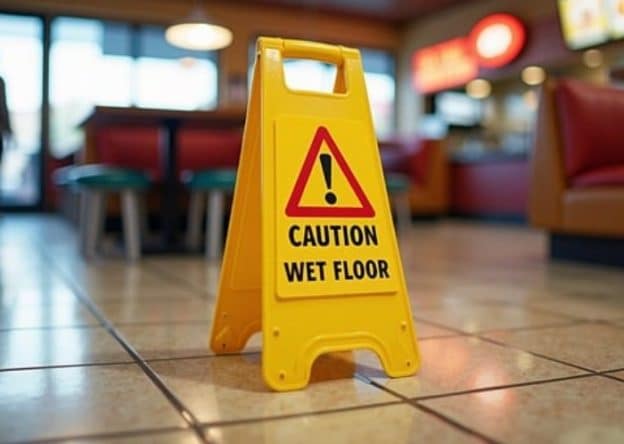
Slip hazards at work rarely look dramatic. They hide in routines, the same doorway, the same hallway, the same mop closet, until one rushed step turns a normal day into an injury report.
Most falls start with small details: a thin film of water, a curled mat edge, a spot of grease near a sink. Catching those details early keeps walkways predictable and keeps the pace of work from adding risk.
Shiny Floors And Wrong Cleaning Routines
Glossy floors look clean and still feel slick under certain shoes. The risk climbs when finish builds up as weeks pass or when dirt gets sealed in and creates a low-friction layer.
When floors look spotless, people move faster, carry more, and cut corners on foot placement. In legal terms, questions of premises liability can turn on whether a slick surface was predictable and left unaddressed. Routine cleaning choices, drying time, and floor finish all shape that predictability.
Night cleaning can create a morning hazard if floors stay damp past opening or if fans are pointed the wrong way. A just-mopped area near a corner can create a surprise slick spot for the first person turning in.
Entryways That Trap Water And Grit
Rain and snow get tracked inside fast, then sit on hard flooring right where foot traffic is heaviest. Grit mixes with water and forms a slick paste that acts like tiny ball bearings under shoes.
Entry mats help, and problems show up when mats are too short, saturated, or bunched. A mat that creeps forward can become a trip edge, and then the next step lands on the wet tile beyond it.
The cost of a fall reaches beyond the injured worker. A Michigan workplace safety fact sheet notes that U.S. businesses spend more than $58 billion per year on workplace injuries, which shows how quickly small hazards can turn into big losses.
Cords, Mats, And “Temporary” Fixes That Stick Around
Extension cords across a walkway are a classic trip setup, and the slip risk comes next. When a foot catches the cord, the body twists, and then the planted foot can slide on a polished surface.
Loose mats near printers, loading bays, or time clocks drift out of place during busy periods. Corners curl, edges fold, and a mat becomes a ramp that changes traction step by step.
Quick fixes like cardboard over a wet patch or tape over a torn mat tend to last longer than planned. Those patches change friction and hide unevenness, so the surface feels normal until the moment it does not.
Busy Break Rooms And Spill Zones
Break rooms collect the most slippery mix in one small space: water, coffee, oil, and dropped food. Spills spread under chairs, then shoes track a thin film back into hallways.
Trash areas create their own slick spots through leaks and condensation. A bag placed on the floor can leave a wet ring that blends into the tile pattern.
Simple layout choices cut spill exposure. A small cleanup kit placed within arm’s reach makes a quick response more likely.
- Paper towels or absorbent pads.
- A small wet-floor sign.
- Degreasing spray for oily drips.
Stairs, Ramps, And Tiny Changes In Level
Stairs magnify small traction problems. A damp stair tread gives less margin for recovery, and a missed step often leads to a fall that gains speed.
Ramps can be tricky when slope changes or when a smooth coating is applied for looks. A ramp that feels fine in dry conditions may feel like ice when water shows up from cleaning or weather.
Changes in level that measure less than an inch still matter. Threshold strips, old patches, and settled concrete create micro-steps that catch a toe, then the follow-up step lands on a surface with less grip.
Poor Lighting And Visual Clutter
Low light hides puddles and hides edges in spots like dark flooring and shadowy corners. Glare can cause the same problem by washing out texture cues that signal a slick surface.
Visual clutter makes feet follow the eyes. When signs, carts, and stacked boxes compete for attention, foot placement gets less precise, and steps get shorter and faster.
Lighting fixes do not need to be complex. Brighter bulbs, cleaned fixtures, and light aimed at floor level make surface changes easier to spot near doors and around corners.
Weather, Footwear, And The “Wet Floor” Gap
Weather shifts the whole building’s risk profile in minutes. A dry lobby at 8:00 can be wet by 8:15 if a storm hits and traffic spikes.
Footwear matters, but dress codes and uniform rules can limit choices. Tread that is too smooth or worn down creates more sliding, often on sealed concrete or polished stone.
Signs help and still leave gaps. A sign placed far from the actual wet area becomes background noise, and people start stepping around it without changing speed or route.
Storage Creep In Aisles And Workstations
Storage creep happens when work grows, and space stays the same. Boxes, pallets, and carts move into walkways, then workers take tighter turns and walk closer to the edges of mats and thresholds.
Narrow routes create side steps and quick pivots. Those movement patterns raise the chance that a shoe lands partly on a mat and partly on bare floor, which can create a sudden traction change.
Aisles stay safer when storage rules match reality. Quick checks help keep overflow from turning into a daily obstacle course:
- Keep lanes marked and visible.
- Stage pallets in set drop zones.
- Clear corners at shift change.
Reporting, Training, And Near-Miss Signals
Falls often follow a chain of near-misses that never get logged. A slip that did not cause an injury can still point to a cleaning pattern, a drainage issue, or a worn floor coating.
National safety messaging keeps bringing this up. A 2024 NIOSH workplace safety month post lists slips, trips, and falls among its focus areas, which reflects how common these events remain across many job types.
Data collection supports the same idea. An OSHA news release describing national injury reporting notes that the data comes from hundreds of thousands of OSHA Form 300A reports, and that scale can help track where prevention work should land first.
Small hazards stay small when the workday makes them visible. A culture that treats a damp patch, a curled mat edge, or a dim stairwell as a right-now issue reduces the odds that the next step becomes the bad one.
Clear floors and steady traction come from repeated choices, not one-time fixes. Over weeks, the workplace feels calmer, movement stays more predictable, and the hidden hazards lose their power.
