Pests in the office are more than just an annoyance. They can impact employee health, disrupt work, and damage your office environment.
But when it comes to pest control, conventional methods often rely on harsh chemicals that could harm your team and the planet.
The good news is that you don’t need to compromise on health or sustainability to maintain a pest-free workplace. By adopting eco-friendly pest control measures, you can protect your office while supporting your company’s green initiatives.
Here’s how to keep pests out of your office the eco-friendly way.
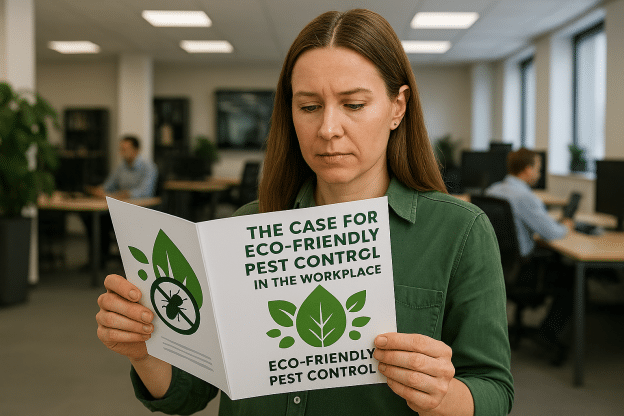
The Case for Eco-Friendly Pest Control in the Workplace
Let’s face it: it’s impossible to focus when you’ve got worries about pests in the back of your mind. Here are a few other reasons why eco-friendly pest control matters so much:
Protect Employee Health
Traditional pesticides are loaded with chemicals that can linger in the air and on office surfaces. For employees with allergies, asthma, or chemical sensitivities, exposure to these toxins in enclosed spaces could cause serious health issues. Eco-friendly pest control methods, on the other hand, avoid hazardous chemicals, creating a safer workspace for everyone.
Reduce Environmental Impact
Conventional pest control methods don’t just harm pests, but can also harm the environment. Pesticide runoff can pollute water supplies, and certain chemicals can damage ecosystems. Non-toxic, sustainable pest solutions eliminate this risk, keeping your office environment aligned with eco-conscious values.
Align with Sustainability Goals
Many businesses today are striving to become greener, either unofficially or officially through ESG goals, and this includes a robust pest control strategy. Eco-friendly practices show your commitment to corporate social responsibility, appealing to environmentally savvy clients and employees. Plus, using sustainable methods reflects positively on your brand’s reputation.
Office Maintenance as a First Line of Defense
A clean and organized office is one of the best preventive measures against pests. Follow these essential maintenance tips to make your workspace less inviting to unwanted guests.
Store Food Properly
Office kitchens and break rooms often attract pests when food isn’t stored securely. Encourage employees to keep snacks in sealed containers and to avoid leaving open food on desks. Refrigerate perishables and make sure food is never left overnight.
Manage Garbage Effectively
Overflowing bins and unsealed trash bags are a buffet for pests like rodents and cockroaches. Use tightly sealed trash cans and empty them daily. Compost bins, if you use them, should also be emptied regularly to prevent pest activity.
Clean Communal Areas Daily
Shared spaces like kitchens, break rooms, and bathrooms should be cleaned and sanitized every day. Wipe down surfaces, clean food crumbs, and make sure dishes aren’t left in the sink overnight. It sounds too simple to be effective, but remember: a little daily effort goes a long way in deterring pests.
Control Ventilation and Humidity
Pests like mosquitoes, silverfish, and cockroaches thrive in humid conditions. Use dehumidifiers and ensure proper ventilation in your office, especially in bathrooms and storage areas. Fix any leaks promptly to avoid creating moist environments where pests can breed.
Natural and Green Alternatives to Pesticides
When pests find their way inside, you can turn to safe and natural solutions to eliminate them without toxic chemicals.
Essential Oils as Natural Repellents
Certain essential oils are known to repel pests. For example, citronella and eucalyptus oils work well against mosquitoes, while peppermint oil can deter ants and spiders. Dilute the oils with water and spray them in areas where pests are likely to appear.
Pest-Deterring Indoor Plants
Some plants not only improve air quality but also help deter pests. For example, basil and lavender can repel flies, while marigolds are effective against mosquitoes. Consider placing these plants near entry points or in communal areas for an added layer of protection.
Non-Toxic Traps and Barriers
Instead of reaching for toxic sprays, opt for chemical-free traps and barriers. Sticky traps can capture pests like roaches and spiders, and mesh screens can keep flying insects out. These low-maintenance solutions are easy to implement and safe for office environments.
Certified Green Products
If you prefer ready-made solutions, look for products certified by organizations like the EPA’s Safer Choice program or those listed by the Organic Materials Review Institute (OMRI). These certifications ensure the products are both effective and environmentally responsible.
Eco-Friendly Pest Control Services
Sometimes, professional help is necessary to address more significant pest issues. Working with an eco-conscious pest control provider ensures you’re taking care of the problem sustainably.
The Integrated Pest Management (IPM) Approach
Integrated Pest Management (IPM) combines prevention, monitoring, and targeted treatment to tackle pests effectively without overreliance on chemicals. This approach minimizes environmental impact while making sure pests are dealt with efficiently.
What to Look for in a Provider
When you’re ready to choose a service, ask first about their experience with eco-friendly practices. Do they use natural treatments? Are their methods aligned with IPM principles?
Look for certifications, such as GreenPro accreditation or local sustainability awards, to ensure credibility. A provider with local expertise will also be familiar with the common pests in your area and how to manage them effectively.
Office-Wide Awareness and Policies
If you want to enjoy long-term success with your pest control efforts, you need to create an office-wide culture of pest prevention. Engage your employees with your efforts, and make pest management part of daily office habits. This will help you prevent issues before they ever even arise.
Educate Your Team
Teach employees how their habits (like leaving food at their desks or failing to empty personal trash cans) can attract pests. Regular reminders through emails or team meetings can reinforce the importance of these behaviors.
Use Signage in Communal Areas
Place signs in kitchens, bathrooms, and break rooms to encourage pest-friendly habits. For instance, signs reminding employees to clean up spills or seal trash bags can make a noticeable difference.
Offer Training Sessions
Consider hosting short training sessions about pest prevention. Local pest control professionals may even be willing to provide insights or demonstrations for your team. This not only helps in preventing pests but also aligns with fostering a green office culture.
Work Smarter, Not Harder
Sustainable, non-toxic pest control is the future for health-conscious and environmentally responsible workplaces. By combining proactive office maintenance, natural alternatives, and professional eco-friendly services, you can maintain a pest-free environment that prioritizes employee well-being and sustainability.