
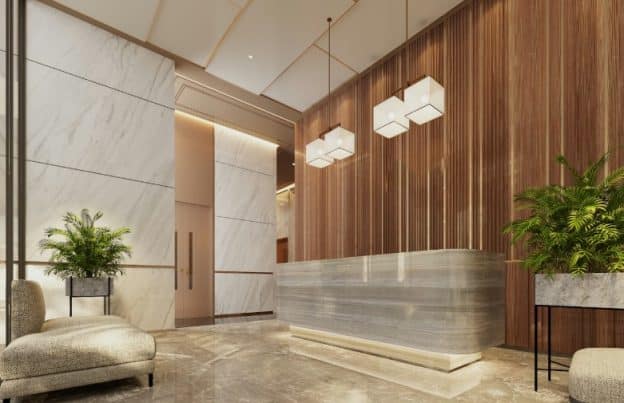
Every commercial space has a traffic problem it may not even recognize. People move through offices, lobbies and shared areas in patterns that are often unplanned and unguided. Without intentional management, those patterns create bottlenecks, confusion and friction.
Queue management is one of those operational details that gets noticed only when it is missing. A crowded reception area, a disorganized check-in process or a congested corridor during peak hours can quietly erode the experience for employees and visitors alike.
For office managers and facility planners, addressing how people move through a space is not a luxury. It is a practical requirement that affects safety, professionalism and daily efficiency.
Why Queue Management Matters in Commercial Environments
The way people experience a physical space shapes their perception of the business that occupies it. A visitor who walks into a well-organized lobby with clear flow patterns immediately feels a sense of order. One who encounters a confused crowd at the front desk forms a very different impression.
In offices that handle regular foot traffic, queues form at predictable points. Reception desks, elevator banks, security checkpoints and shared amenities like kitchens and copy rooms all create natural congestion zones.
Left unmanaged, these zones become sources of stress. Employees lose time standing in unclear lines. Visitors feel uncertain about where to go. In some cases, crowded pathways even create safety risks during emergencies.
High-traffic commercial spaces such as showrooms, medical offices and co-working hubs face similar challenges. The common thread is simple: wherever people gather, flow needs to be managed.
Common Queue Challenges in the Workplace
Most queue-related problems in offices stem from a lack of structure rather than a lack of space. The area around a reception desk might be perfectly adequate in square footage but still feel chaotic because there is no defined path for visitors to follow.
Meeting room corridors can become congested when multiple sessions end at the same time. Elevator lobbies in multi-tenant buildings are notorious for crowding during morning arrivals and evening departures.
Open-plan offices present their own challenges. Without clear boundaries, foot traffic crosses through workstations and disrupts concentration. Employees walking to shared facilities cut through focus zones, creating noise and visual distraction.
Event spaces within commercial buildings add another layer of complexity. Town halls, training sessions and company gatherings bring large groups into areas not designed for that volume. Without queue planning, entry and exit become disorderly.
Types of Queue Management Solutions
Queue management does not require complex technology or a major budget. Many of the most effective solutions are simple, physical and easy to deploy.
Floor markings are one of the most straightforward options. Adhesive decals or painted lines can guide foot traffic along defined paths. They work well in areas where permanent fixtures are not practical and can be updated or removed as needs change.
Signage plays a supporting role. Clear directional signs reduce uncertainty and help people self-navigate without needing staff to direct them. Signs are especially useful in buildings with multiple tenants or public-facing reception areas.
Zoning is another powerful approach. By dividing an open area into designated sections for waiting, walking and working, facility managers can reduce overlap and improve the overall sense of order.
Physical barriers bring the most visible structure to a space. Retractable belt stanchions, post-and-rail systems and rope-style barriers create defined lanes that guide people intuitively. These are common in banks, airports and government offices but are equally effective in corporate settings.
The Role of Physical Barriers in Office Spaces
Physical barriers do more than manage lines. They communicate expectations. When a visitor sees a clearly defined pathway leading to a check-in desk, they understand instantly where to go and how to behave in that space.
In shared commercial environments, rope queue barriers offer a particularly effective solution. They create structured queuing lanes that can be adjusted quickly to suit different situations. During a morning rush they can direct visitor flow toward a reception desk. During a company event they can shape entry paths and control crowd density.
The visual presence of rope barriers also adds a layer of professionalism. Unlike makeshift arrangements like chairs or desks pushed into position, rope barriers signal that the space has been planned with care. This matters in offices that host clients, partners or job candidates on a regular basis.
Their portability is another advantage. Rope barriers can be deployed, reconfigured or stored within minutes. This makes them a practical choice for spaces that serve multiple purposes throughout the day or week.
Designing Spaces With Flow in Mind
Queue management works best when it is built into the design of a space from the beginning rather than added as an afterthought. Facility planners who consider traffic flow during the layout phase avoid many of the problems that require later intervention.
Reception areas should have enough open space in front of the desk to accommodate a short queue without blocking the main entrance. Corridors leading to high-use rooms should be wide enough for two-way traffic. Elevator lobbies should include clear waiting zones that do not spill into walkways.
For businesses evaluating or redesigning their workplace layout, understanding current trends in office space design can provide useful context. Modern office planning increasingly emphasizes flow, accessibility and adaptable spaces that respond to how people actually move through a building.
Co-working spaces and multi-use commercial buildings benefit from flexible layouts that can shift between open collaboration and structured queuing depending on the activity. Modular furniture, moveable partitions and portable barriers all support this kind of adaptability.
Where to Place Queue Solutions for Maximum Impact
Choosing the right locations for queue management tools is just as important as choosing the right tools. Placement should be guided by observation of actual traffic patterns rather than assumptions about where crowding might occur.
Reception and front desk areas are the most obvious starting point. This is where first impressions are formed and where the highest volume of visitor interactions takes place. A well-organized queue here sets the tone for the entire visit.
Elevator banks and stairwell entrances in multi-story buildings benefit from simple lane markings or stanchions during peak hours. These prevent the cluster effect that slows movement and frustrates tenants.
Shared amenities like break rooms, kitchens and mail rooms often go unaddressed. A few directional signs or floor arrows can smooth the flow and reduce the awkward standoffs that happen when two groups converge in a tight space.
Event and training areas within the office require temporary queue solutions that can be assembled quickly and removed just as fast. Portable rope barriers and retractable stanchions are ideal for these scenarios.
Security checkpoints and access-controlled zones also benefit from defined lanes. Clear queuing in these areas keeps throughput consistent and supports the protocols that building management has put in place.
Benefits of Getting Queue Management Right
The most immediate benefit of good queue management is a reduction in perceived wait times. Research consistently shows that people feel less frustrated when they can see that a queue is organized and moving, even if the actual wait is the same length.
Safety is another critical factor. In emergencies, clearly defined pathways and open corridors allow for faster evacuation. Cluttered or poorly organized spaces create hazards when people need to move quickly.
Professional image matters more than many businesses realize. A visitor who encounters a smooth and orderly flow through your space carries that impression into the meeting that follows. First interactions shape business relationships, and the physical environment is part of that interaction.
Operational efficiency improves as well. When employees and visitors move through a space predictably, reception staff can manage their workload more effectively. Security teams can monitor access points with greater clarity. Facility managers can plan maintenance and cleaning schedules around actual usage patterns.
Cost and Maintenance Considerations
Queue management solutions come at a range of price points. Floor markings and signage are inexpensive to produce and install. Physical barriers require a higher initial investment but offer years of use with minimal maintenance.
Retractable belt stanchions and rope barriers are durable and designed for frequent handling. Most require only occasional cleaning and inspection. Replacement parts like belts and ropes are readily available and easy to swap out.
For businesses on a tighter budget, starting with signage and floor markings in the highest-traffic areas is a practical first step. Physical barriers can be added over time as needs become clearer and budgets allow.
The key is to avoid the temptation to do nothing. Even a modest investment in queue management delivers measurable returns in terms of visitor experience, employee satisfaction and operational flow.
A Strategic Approach to Workplace Flow
Queue management is not a one-time project. It is an ongoing part of managing a functional and professional commercial space. Traffic patterns change as teams grow, tenants rotate and office layouts evolve.
The most effective approach is to observe, plan and adjust. Walk through your space during peak hours. Note where people cluster, hesitate or change direction. Use those observations to place solutions where they will have the greatest impact.
Think of queue management as part of the same conversation as office layout, furniture selection and workplace culture. It is a design decision that reflects how seriously a business takes the experience of every person who walks through its doors.
A well-managed space does not just look organized. It feels considered. And in a competitive commercial environment, that feeling makes a difference.
