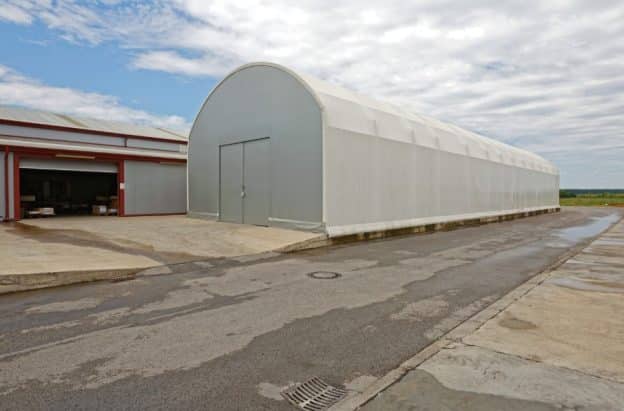
Traditional construction often forces business owners into a restrictive cycle of long timelines and high capital expenditure. When a company outgrows its current footprint, the immediate instinct is to look for a new lease or commission a permanent expansion. However, the modern commercial landscape demands more agility than a brick-and-mortar foundation typically allows.
Fabric structures offer a sophisticated departure from these conventional constraints. These buildings utilize high-strength membranes and engineered frames to create professional environments that rival permanent facilities in performance. By rethinking the necessity of concrete and wood, organizations can secure high-quality workspace without the financial burden of traditional development.
The Financial Advantages of Fabric Infrastructure
Choosing a commercial fabric building allows a company to bypass many of the hidden costs associated with traditional commercial real estate. Traditional projects often involve extensive site preparation and long-term debt service that can strain a firm’s balance sheet. In contrast, fabric structures require less intensive ground intervention. Many of these designs utilize a specialized mounting base that simplifies the connection to the earth, significantly reducing the cost of heavy machinery and labor.
Because the components are manufactured off-site, the predictability of the budget increases. You avoid the common ‘change order’ culture of standard construction, where weather delays or material shortages drive costs upward. Furthermore, the speed of assembly means the return on investment begins much sooner, as the facility becomes operational in weeks rather than months.
Engineering for Professional Performance
A common misconception suggests that fabric buildings are temporary or flimsy shelters. On the contrary, modern units rely on robust steel frames that provide the same structural integrity as industrial warehouses. These frames support heavy equipment and can be engineered to withstand specific regional wind and snow loads. Unlike older tent-style designs, high-performance fabric structures do not require interior legs to maintain their shape. This ‘clear-span’ design maximizes every square inch of the floor plan, allowing for total freedom in how you arrange your operations.
The architectural membrane is pulled tight via a sophisticated tension mechanism, creating a taut, durable skin that resists the elements and prevents flapping or noise. This engineering ensures that the interior environment remains stable, quiet, and indistinguishable from a standard office or workshop during daily use.
Interior Climate and Environmental Control
Maintaining a comfortable workspace is essential for employee productivity, and fabric structures excel in this area through advanced thermal management. These buildings integrate seamlessly with standard HVAC systems, ensuring that staff remain cool in the summer and warm in the winter. The membrane materials often possess unique thermal properties that contribute to superior energy efficiency compared to thin-walled metal buildings.
During the day, the translucent nature of certain fabrics allows for an abundance of natural lighting. This reduces the reliance on artificial overhead lights, lowering monthly utility bills and creating a more pleasant atmosphere for the workforce. When you combine high-quality insulation packages with these light-harvesting properties, the operational costs of the building drop significantly over its lifespan.
Adaptability and Regulatory Compliance
One of the most significant hurdles in business expansion is navigating local building codes and zoning requirements. Fabric structures are frequently classified in ways that simplify these administrative processes. Because they utilize a specialized anchoring system, they are often viewed as relocatable equipment rather than permanent real estate, which can offer tax advantages and faster permitting in many jurisdictions. This flexibility is vital for companies that operate on leased land or in industries where project locations change.
If a business needs to move, these structures can be disassembled and transported, preserving the initial capital investment. This modularity makes them ideal for creating mobile offices or satellite hubs that can follow the growth of the company rather than tethering it to a single, static location.
Designing Functional and Collaborative Workspaces
Inside a fabric structure, the layout possibilities are virtually endless due to the absence of load-bearing internal walls. Businesses can easily set up modular spaces that cater to different departments, from quiet zones for deep work to collaborative areas. The open-span nature of the building is perfect for installing open-plan desks that foster communication among team members.
If the business grows, the structure can often be extended by adding more frame segments, allowing the building to ‘inhale’ and ‘exhale’ with the company’s needs. This level of customization ensures that the physical environment supports the specific workflow of the organization rather than forcing the employees to adapt to a rigid, pre-existing floor plan.
Maintenance and Long-Term Reliability
The simplicity of fabric architecture translates to lower long-term maintenance requirements. Unlike traditional roofs that may leak or require shingle replacement, high-quality architectural membranes are treated to resist UV degradation and fungal growth. Most reputable providers offer comprehensive installation services to ensure the structure is set up correctly from day one, which prevents early wear and tear. Because the materials are highly durable, the need for on-site maintenance is minimal.
There is no exterior paint to chip or siding to dent. If a portion of the fabric does sustain damage, it can often be patched or replaced in sections without compromising the entire building. This ‘set it and forget it’ reliability allows facility managers to focus their time and budget on core business activities rather than constant building repairs. Choosing a low-maintenance envelope ensures that the facility remains a high-performing asset rather than a recurring line item for upkeep.
Conclusion
The transition from traditional office buildings to fabric structures represents a shift toward more intelligent, responsive business management. While the initial appeal of these buildings is often the lower price point, the long-term value lies in their versatility and efficiency. They provide a professional, climate-controlled environment that can be deployed quickly and moved if necessary, protecting the company’s assets in a volatile market. By choosing an engineered fabric solution, an organization avoids the debt and delays of the construction industry while gaining a high-performance space tailored to its exact needs.
As the demand for agile workspaces continues to grow, fabric structures stand out as the most logical alternative for businesses that value both their employees’ comfort and their own bottom line.