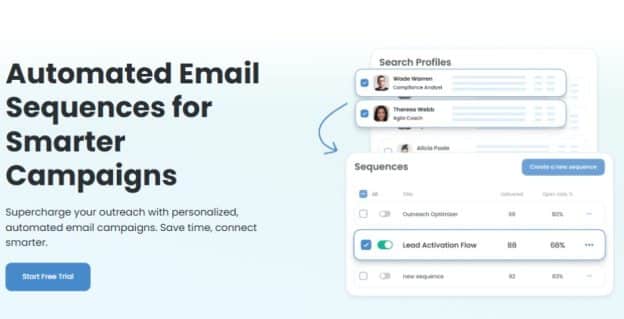
In commercial real estate, email is one of the few channels that consistently deliver. Deals move slowly, and conversations often stretch across weeks or months. Prospects drop in and out depending on their priorities, so a single message rarely keeps the process alive. A simple sequence helps maintain momentum, reminds people about the conversation, and keeps your name visible without sounding pushy.
Why Email Works Well for Commercial Real Estate
CRE decisions also involve several people, not just one contact. Investors, legal teams, analysts, and executives all weigh in at different stages. Email fits that reality well. It’s easy to forward, easy to revisit, and doesn’t demand immediate attention the way a call does. It keeps everyone aligned while giving them space to review details on their own schedule.
What Email Sequences Bring to Lead Generation
A well-built sequence transforms sporadic outreach into a reliable system. It ensures your message reaches the right person at the right time with the right context.
- Consistent outreach that builds top-of-mind awareness;
- Better timing through automated, logic-based triggers;
- Clear segmentation for different buyer personas and asset classes;
- Personalization at scale using merge fields and behavioral data;
- Measurable performance with clear engagement metrics.
This method shifts lead generation from a reactive task to a predictable channel. You stop chasing and start cultivating.
How to Build an Effective CRE Email Sequence
A good email sequence starts with a clear idea of who you are writing to. You cannot rely on a few generic messages and hope they work. Different prospects look for different things, especially in commercial real estate. Someone who has only downloaded a report needs basic context. Someone who has already toured a property expects details.
Each message should move the conversation one small step forward. When the sequence is built around simple and practical steps, the response rate usually grows without extra effort.
Segment Prospects by Intent
Blasting the same message to every lead is a recipe for low engagement. Your cold list of downloaded market reports needs a different narrative than warm leads who have toured a property.
Returning clients deserve a separate track focused on new opportunities. Tailoring the message to their position in the funnel dramatically increases relevance. A CFO evaluating a financial model cares about different details than an asset manager assessing tenant fit.
Keep Messages Short and Relevant
Busy executives will not read long emails about property features. They want the insight, the bottom line, the clear next step. Focus each message on a single value point. Reference a recent market shift. Share a quick case study about how you solved a similar problem for another client.
The objective is to provide a moment of value that justifies the time spent reading. Cut the fluff, get to the point, make it worth their while.
Use Structured Follow-Ups
Timing is everything in follow-up communication. A common logic might involve an initial email, a second touch three to four days later with additional social proof, and a final touch a week after that with a direct but soft question.
This structure prevents you from disappearing while avoiding the perception of desperation. The sequence creates multiple opportunities for a response without manual effort from the broker.
Key Metrics That Show Whether a Sequence Works
You cannot improve what you do not measure. Tracking engagement data tells you if your content resonates and your timing is effective. Most teams track basic indicators such as opens, replies, and bounces to understand whether the sequence is moving in the right direction. A low open rate suggests subject lines are failing. A high bounce rate indicates list quality issues.
Reply rates, even if just a “not interested,” signal that the message is provoking a human response. This data is your guide for constant refinement.
Common Mistakes When Running Email Sequences
Many CRE firms launch sequences that underperform due to avoidable errors. The setup seems correct, but the execution lacks finesse, leading to muted results and wasted opportunities.
- Unclear subject lines that bury the value proposition;
- Long messages that overwhelm instead of inform;
- No follow-up structure, letting hot leads go cold;
- Ignoring data and failing to pause or adjust a failing campaign.
These missteps can sink an otherwise solid strategy. The fix is often simple once you identify the problem.
A Simple Example of a CRE Email Sequence
Consider a four-email sequence designed for a lead who downloaded a report on industrial warehouse trends. The goal is to start a conversation, not close a deal in four emails.
- The first email sets the context by linking their download to a broader shift happening in the market.
- The second shares a short real-world example that shows how others are responding to the same trend.
- The third checks in with one straightforward question to see whether this issue matters for their portfolio.
- The final email offers an easy next step, such as a small data pack or a quick comparison sheet.
This flow provides value, asks for engagement, and defines a clear path forward.
When to Rewrite or Reset a Sequence
Market conditions change, and so does audience fatigue. A sequence that worked last quarter might generate crickets today. Telltale signs include a sustained drop in open rates, an increase in unsubscribe activity, or a complete lack of replies.
If your value propositions feel outdated or your subject lines stop working, it’s time for a rewrite. Maybe the messaging no longer fits the current economic context. Don’t be afraid to scrap a sequence and start fresh.
Final Thoughts
Structured email outreach is a powerful tool for managing the long, complex sales cycles in commercial real estate. It brings discipline to a process that can otherwise feel chaotic and relationship-dependent. Firms that master this channel build a consistent pipeline of warm, educated leads. A well-oiled sequence, focused on timing and value, keeps your firm positioned as the expert, ready to act when the client is.