
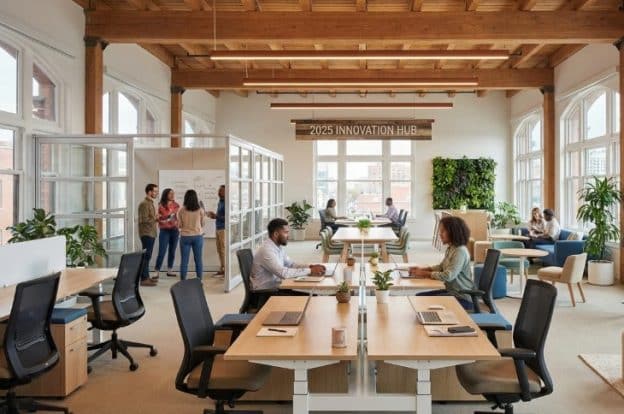
Office furniture has quietly become one of the most important decisions companies make. It’s no longer just about having desks and chairs—it’s about creating an environment where people actually want to work and can do their best.
Stop Ignoring Back Pain
Let’s be honest: sitting in a bad chair all day is miserable. Companies that invest in ergonomic furniture—adjustable desks, supportive chairs, proper monitor stands—see real results:
- Employees complain less about aches and pains
- Fewer people taking sick days
- Better focus and energy by end of day
Your team will thank you. And your healthcare costs might drop too.
The science behind this is straightforward. When employees are physically comfortable, they spend less time adjusting positions, rubbing their necks, or dealing with fatigue. Studies consistently show that proper ergonomic setup can increase productivity by 10-25%. That’s not a small number when you’re managing a team of any size.
Adjustable standing desks have become particularly popular because they let people switch between sitting and standing throughout the day. This small change reduces the health risks associated with prolonged sitting while giving employees more control over their workspace. Task chairs with lumbar support, armrests, and adjustable heights make a visible difference in how people feel after 8 hours of work.
The long-term benefit? Lower turnover. When people feel physically cared for, they stay longer.
Flexibility Is the New Normal
Hybrid work isn’t going anywhere. Your office needs to adapt fast.
What this means for furniture:
- Desks that move and reconfigure without a crew of people
- Partitions you can shift around for privacy when needed
- Tables that work for both heads-down work and team collaboration
- Comfy lounge spots for informal meetings
If your office still looks the same on Monday as it didn’t on Friday, you’re probably not set up right for how people actually work now.
The old cubicle farm model is dead. Modern offices need to support multiple work styles simultaneously. Some people need quiet focus time. Others thrive in collaborative environments. Many need both on the same day.
Modular furniture systems solve this problem. Lightweight desks on wheels can be repositioned in minutes. Moveable acoustic panels create privacy without permanent walls. Collaborative islands with flexible seating accommodate everything from brainstorming sessions to casual lunch meetings.
This flexibility also helps with space efficiency. Instead of assigning permanent desks to everyone, many companies now use hot-desking systems with mobile, multipurpose furniture. You can fit more people into less space without making anyone feel cramped. It’s practical and cost-effective.
Your Office Says Something About You
Here’s something that often gets overlooked: your office tells a story.
Walk into a space with mismatched, worn-out furniture? That sends a message. Walk into something modern, cohesive, and thoughtfully designed? That’s different. Employees feel it. Clients notice it.
Good furniture doesn’t have to mean expensive. It means:
- A consistent look and feel
- Quality materials that last
- Designs that feel intentional
- Lighting that actually works
When you interview candidates, they’re evaluating your office. A thoughtfully designed space signals stability, investment, and respect for employees. It’s one of the first things people notice, and it influences their decision to accept an offer.
The same applies to client meetings. Shabby furniture sends the wrong message. Modern, professional furniture builds confidence. Clients assume that if you care about your workspace, you care about your work.
Beyond impressions, there’s the psychological impact on your team. Working in an attractive, well-maintained space boosts mood and motivation. Color palettes matter. Lighting matters. Materials matter. Natural textures like wood and plants make spaces feel warmer and more inviting than purely industrial setups.
Sustainability: It Matters
If you’re trying to attract good people, they care about what your company stands for. Sustainable furniture isn’t a nice-to-have anymore—it’s becoming expected.
Look for:
- Wood from responsibly managed forests
- Recycled or recyclable materials
- Finishes that don’t off-gas toxins
- Pieces built to last decades, not months
Bonus: These items often hold up better anyway.
Companies with strong ESG commitments are seeing real advantages in recruitment and retention. Younger employees, in particular, want to work for organizations that align with their values. Sustainable office furniture is a visible demonstration of those values.
Beyond ethics, there’s a practical angle. Durable, high-quality furniture actually costs less per year over its lifetime. Cheap furniture breaks, gets replaced, and ends up in landfills. Good furniture lasts 10+ years. The math works out in favor of investing upfront.
Low-VOC (volatile organic compound) finishes matter too. They mean fewer toxins off-gassing into your office air, which improves air quality and reduces headaches and respiratory issues. It’s another small investment that pays dividends in employee health.
Finding the Right Partner for Custom Solutions
When you’re outfitting an entire office or need something tailored to your exact specifications, working with a specialized manufacturer makes sense. This is especially true if you want custom designs without the premium markup.
Manufacturers offering OEM/ODM capabilities can work with you to create desks, chairs, and workstations that match your exact needs—whether that’s specific dimensions, materials, or branding. Vision Furniture, a China-based office furniture manufacturer, specializes in this kind of customization, offering flexible production options for companies looking to source quality pieces globally.
The advantage? You get modern, ergonomic designs tailored to your workplace without paying for generic, off-the-shelf solutions. When you’re furnishing a large office or multiple locations, custom manufacturing can deliver significant cost savings while ensuring every piece fits your vision perfectly.
OEM/ODM production means you can specify everything from dimensions and materials to color and finish. Need standing desks in a specific width? Want chairs with your company colors? Need workstations designed around your workflow? Custom manufacturers can handle it all.
The Global Advantage
You don’t have to stick with local suppliers. International manufacturers—especially those with established quality standards—often offer better customization, modern designs, and competitive pricing.
Many successful companies now source office furniture globally to get exactly what they need at a reasonable cost. The key is finding partners you can actually trust and who understand your timeline and specifications.
Manufacturers in established production hubs have refined their processes over years. They understand international shipping, customs, and quality standards. They’ve built relationships with material suppliers and quality inspectors. This expertise translates to better products at better prices.
When evaluating global partners, look for certifications, references, and examples of previous work. Check their production capacity and lead times. Ask about their quality control process. A reputable manufacturer will be transparent about all of these things.
Technology Integration
Modern office furniture increasingly incorporates technology. Cable management systems, built-in charging stations, and integrated power outlets are now standard expectations rather than luxuries.
Sit-stand desks with memory presets let employees save their preferred heights at the touch of a button. Some advanced models track usage and send wellness reminders. Conference tables with integrated video conferencing cameras and audio systems make remote participation seamless.
This integration matters because it removes friction. When technology works smoothly, people focus on their actual work instead of fumbling with cables or struggling to connect to video calls.
The Bottom Line
Your office environment directly affects how your team performs. Investing in good furniture pays off in ways you can measure: fewer sick days, better retention, higher morale.
Whether you’re redecorating a few floors or furnishing a new office from scratch, think of it as an investment in your people—not just an expense line item.
The furniture you choose shapes your workplace culture. It influences how people collaborate, how focused they can be, and how valued they feel. It communicates your company’s values to both employees and visitors.
What this means for your next project: Take time to evaluate what your team actually needs. Mix ergonomics with flexibility. Choose quality over quantity. And don’t be afraid to look beyond your backyard for suppliers who can deliver custom solutions at competitive prices. The right furniture partner will help you create a workspace that works as hard as your team does.