
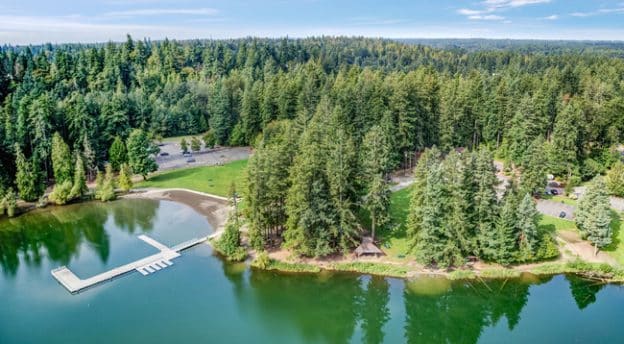
Access to parks and green spaces can have a powerful impact on employee well‑being and performance. Stepping outside for even a few minutes reduces stress, boosts mental clarity, and helps employees return to work feeling refreshed rather than drained. Parks also encourage movement with walking meetings, fresh‑air breaks, or lunchtime strolls, which support better physical health and higher energy levels throughout the day. Beyond individual benefits, shared outdoor spaces strengthen team connection and morale by giving employees a relaxed environment to recharge or collaborate. For organizations looking to elevate productivity and create a healthier, more engaged workforce, integrating nearby parks into the rhythm of the workday is a simple but meaningful advantage.
Cities are often described through their noise: the rush of traffic, the glow of storefronts, the rhythm of construction, and the constant movement of people from one destination to another. Yet some of the most important parts of city life are the spaces where that motion slows down. Urban parks, whether large and historic or small and tucked between apartment blocks, are more than decorative patches of green. They are social spaces, public health assets, environmental buffers, and emotional anchors in places that can otherwise feel crowded and exhausting.
At first glance, a park may seem simple. It has trees, benches, walking paths, and maybe a playground or fountain. But its impact extends far beyond its visible features. In a city where most things cost money, parks offer something increasingly rare: a place where people can exist without being asked to buy, subscribe, reserve, or perform. A student can read on a bench. A retired neighbor can feed birds. Parents can let children run freely. Teenagers can gather without needing a cafe table. Office workers can eat lunch in the shade and return to work feeling slightly more human.
This freedom matters because public life depends on accessible public space. Without it, cities become collections of private experiences: home, car, office, mall, restaurant, repeat. Parks interrupt that pattern. They create room for spontaneous interaction. A dog owner meets another dog owner. A musician plays for strangers. A weekend market appears and turns a familiar walkway into a local event. These moments may seem small, but they build trust and recognition among residents. Over time, they help transform a dense population into an actual community.
Urban parks also play a major role in physical and mental health. In fast-paced environments, people often underestimate how strongly their surroundings affect their mood and energy. Green space can lower stress, encourage exercise, and improve attention. A short walk through a park feels different from a short walk along a busy road, even if the distance is the same. Trees soften noise, shade reduces fatigue, and natural scenery gives the mind a break from the visual intensity of concrete, signs, and screens. For children, access to outdoor play supports development in ways that no indoor entertainment can fully replace. For older adults, safe and welcoming parks can reduce isolation and encourage daily movement.
The psychological value of parks has become even more obvious in times of crisis. During periods when indoor life feels restricted or overwhelming, people often rediscover the importance of open-air spaces. A park becomes a place to breathe, reflect, and reconnect. It offers a sense of relief that is hard to measure but easy to feel. In a world full of notifications, deadlines, and digital clutter, the experience of sitting under a tree for twenty minutes can feel almost radical. Even professionals who spend their day using every available productivity app or a paraphrasing tool often find that clarity returns more easily after time outside than after another hour in front of a screen.
Beyond their social and mental benefits, parks are critical pieces of urban infrastructure. They help cool neighborhoods by reducing the heat absorbed by roads and buildings. They absorb rainwater and reduce pressure on drainage systems during storms. They support birds, insects, and small ecosystems that would otherwise disappear from heavily built environments. In cities increasingly affected by climate change, green spaces are not luxuries. They are practical defenses against heat, flooding, and environmental decline. A city that invests in parks is also investing in resilience.
However, not all parks serve communities equally. In many places, access to clean, safe, well-maintained green space is uneven. Wealthier neighborhoods often enjoy larger parks, better landscaping, more lighting, and better facilities, while underserved areas may have limited or neglected options. This inequality has real consequences. When residents do not have nearby places to walk, gather, or rest, the costs show up elsewhere in public health, social isolation, and reduced quality of life. Good urban planning should treat parks as essential services, not optional amenities reserved for postcard neighborhoods.
Design matters too. A successful park is not simply an empty field with a few trees. It must respond to how people actually live. That might mean shaded seating for older residents, open areas for sports, ramps for accessibility, public restrooms, safe lighting, drinking fountains, and flexible spaces that can host both quiet afternoons and community events. The best parks welcome different kinds of users at the same time. They allow for solitude without loneliness and activity without chaos. They feel open, useful, and cared for.
There is also something symbolic about parks that deserves attention. They remind us that cities do not have to be designed only for efficiency. Not every square meter must generate maximum profit. Not every open area must become a parking lot, tower, or retail zone. Parks declare that beauty, rest, and shared experience have value of their own. They suggest that a good city is not just one that moves people quickly, but one that gives them reasons to stay, notice, and belong.
In the end, urban parks succeed because they meet many needs at once. They improve health without feeling clinical. They support the community without forcing interaction. They protect the environment while enhancing everyday life. Most importantly, they offer a form of public generosity. In a city that asks so much from its residents, a park gives something back: space, air, shade, calm, and the quiet reassurance that life is bigger than the next appointment on the calendar.
The power of Urban Parks is why parks deserve more attention than they often receive. They are not empty spaces waiting to be developed. They are already doing some of the most important work a city can ask of any place.
