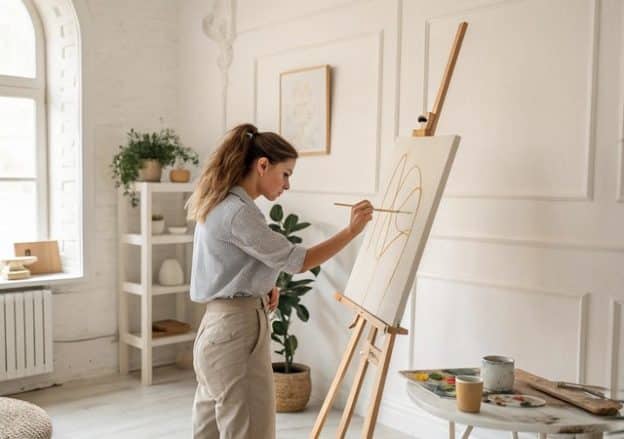
Minimalist wall art in office spaces is more than decoration—it’s a visual philosophy that shapes the environment with clarity and intention. A blank wall becomes an invitation, encouraging creativity and focus rather than excess. By introducing simple, authentic artwork, companies can communicate professionalism, reduce distractions, and foster innovation. Whether in reception areas, conference rooms, or personal workstations, minimalist pieces align the atmosphere with purpose, offering flexibility to evolve as the business grows. Creating your own artwork adds a personal touch, reflecting brand identity and values in a way that is both powerful and refreshingly simple..
Understanding Minimalism
Minimalism is rooted in clarity, refinement, and purpose. Instead of layering many decorative elements, this approach focuses on essentials: clean form, thoughtful color choices, and deliberate negative space. Minimalist art relies on subtle tonal shifts, restrained palettes, and shapes that communicate without overwhelming.
To embrace minimalist principles in DIY art, prioritize intention over complexity. A few carefully chosen details often carry more meaning – and more impact – than an intricate design.
Planning Your Minimalist Wall Art
Before picking up any tools or materials, clarify the mood you want your artwork to evoke. Should the room feel calm and meditative? Structured and modern? Bold in its simplicity? This vision guides your choices in scale, placement, and color.
Measure the intended wall area generously. Minimalist art depends heavily on proportion, and choosing the right size ensures harmony between the artwork and the surrounding space.
Choosing Your Color Palette
Color defines atmosphere. In minimalist design, a reduced palette enhances tranquility and visual clarity. Popular approaches include:
- Monochrome tones for depth without distraction
- Soft neutrals for warmth and serenity
- Bold singular accents for subtle dramatic effect
Observe how natural light interacts with your chosen colors at different times of day – the shifting tones can subtly transform the artwork and the entire room.
Many homeowners pair minimalist designs with iconic artistic influences for inspiration. Exploring classic works – such as the curated selection at tryartwork.com – famous top 10 leonardo da vinci paintings – can provide useful insights into composition, contrast, and artistic restraint, even within historical masterpieces.
Selecting the Right Materials
The materials you choose lay the foundation for both durability and aesthetics. Consider:
- Canvas – timeless and versatile
- Wood panels – structured and warm
- Metal sheets – sleek and contemporary
- Acrylic sheets – crisp and architectural
- Reclaimed materials – perfect for adding organic texture
- Quality paints – essential for clarity and longevity
- Adhesives and mounting hardware – appropriate for the weight and medium
Minimalist art thrives on the quality of materials, so it’s worth selecting items that align with your design vision.
Step-by-Step DIY Minimalist Art Projects
Step 1: Choose Your Base
Select a surface that complements your style – canvas for softness, wood for character, acrylic or metal for a modern edge.
Step 2: Create a Geometric Layout
Painter’s tape is ideal for constructing crisp shapes and structured designs. Minimalist geometry emphasizes balance, so consider symmetry or clean asymmetrical compositions.
Step 3: Apply Paint With Precision
Use smooth, even layers. Allow each coat to dry fully before removing tape or adding additional color fields.
Step 4: Explore Everyday Materials
Simple objects can become artistic tools. For example, fine sandpaper can etch gentle lines into metal surfaces, creating soft reflections that change with lighting.
Step 5: Build Acrylic Layered Art
Cut acrylic into bold, uncomplicated shapes. Spacers allow you to stack the pieces, creating dimensional minimalist sculptures for your walls.
Step 6: Honor Simplicity
Minimalism shines when every element feels intentional. Let the materials, textures, and lines speak without interference.
Simple Geometric Designs
Geometric art aligns perfectly with minimalist aesthetics. Circles, lines, squares, and triangles create visual order and soothing symmetry. Choose colors that support calm rather than overwhelm the eye.
The magic lies in precision – clean edges, balanced shapes, and thoughtful spacing. Once the tape is removed, the crisp boundaries reveal the power of intentional design.
Abstract Line Art
Abstract line art uses the purity of simple strokes to convey emotion and meaning. This style thrives on fluidity and restraint—every line should feel intentional, whether bold or whisper-thin.
Freehand curves, structured compositions, or layered strokes can all capture nuance without complexity. Step back periodically to assess movement, balance, and negative space.
Placed thoughtfully, abstract line art becomes a quiet statement—elegant, expressive, and timeless.
Abstract Textured Pieces
Texture introduces dimension into minimalist art. Using materials like plaster, clay, or textured paint allows you to create sculptural surfaces that shift in appearance throughout the day.
Strong lighting enhances the depth of textures, emphasizing natural shadows and highlights. Minimalist texture work relies on subtle layering—enough to add intrigue, but never enough to disrupt simplicity.
Incorporating Personal Touches
Minimalist art becomes truly meaningful when infused with personal elements. Consider integrating:
- hand-written notes or fragments of poetry
- minimal collaged elements from meaningful objects
- cultural or heritage-inspired markings
- textures created from familiar materials
These small details transform the artwork into something deeply individual without compromising the minimalist ethos.
Custom Painting by Numbers
Paint-by-numbers kits can also be adapted to minimalist aesthetics, especially when using personal photographs as the base design. Choose a vendor that provides high-quality materials, work patiently through each section, and enjoy the gradual emergence of a clean, structured artwork.
Hanging and Arranging Your DIY Wall Art
Placement is a crucial part of minimalist design. Consider:
- the wall’s size and negative space
- lighting conditions
- nearby furnishings
- the visual weight of the artwork
Use appropriate hardware and avoid overcrowding the wall. Minimalism values breathing room – leave space around each piece so it can stand on its own.
Conclusion
Minimalist DIY wall art is a celebration of restraint, clarity, and intention. By stripping away the unnecessary, every line, shade, and texture becomes more meaningful. Your wall becomes a quiet narrative – an expression of your brand crafted with purpose.
In the end, the beauty of minimalist art lies in its ability to communicate powerfully through simplicity. Your design choices, no matter how small, shape a space that feels calm, expressive, and unmistakably yours.