
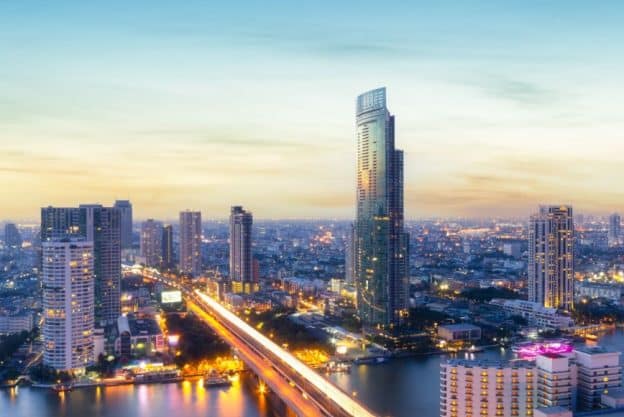
Bangkok is one of those cities that surprises people. You arrive expecting a chaotic, overcrowded metropolis, and you find a city with a functioning sky train network, good hospitals, decent international schools, and a business community that runs deeper than most people anticipate. More companies are setting up regional offices here every year, and the office market has grown with them.
But renting office space in Bangkok comes with its own set of quirks. The market works differently from what most Western or even regional business owners are used to, and getting the location wrong can cost you more than money. For companies wanting flexibility at the start, a serviced office in Bangkok near the BTS is usually the smartest entry point. Here is what you should know before you commit to anything.
Why Location Matters More Than You Think
Bangkok traffic is genuinely difficult. Not “a bit worse than usual on Fridays” is difficult. We are talking about gridlock that can turn a five-kilometre journey into 40 minutes on a bad day. This is not an exaggeration, and it has a real effect on your business.
An office that looks fine on a map but sits away from a transit line will struggle to attract good staff. Candidates in Bangkok are very aware of commute time when they consider job offers. They will take a lower salary at a well-located company over a higher one somewhere harder to reach. Your office location is, in a very practical sense, part of your compensation package.
This is why the BTS Skytrain matters so much. Being near a station changes who you can hire, whether clients will bother visiting in person, and how your team feels at the end of a long day. The three main commercial areas to consider are:
- Silom and Sathorn are Bangkok’s traditional financial district, home to banks, law firms, and multinationals. Prestigious address, high rents, and well-served by both BTS and MRT.
- Sukhumvit (Asok to Thong Lo) is where most tech companies, startups, and newer regional offices have landed. More relaxed atmosphere, good food nearby, strong expat and young professional community.
- Ratchadaphisek and Phetchaburi offer a step down in rent with still-decent transport links. Good option if budget is a constraint and you do not need a premium address.
Understanding the Types of Office Space Available
Bangkok gives you three main options, and they suit very different situations.
Traditional office leases are what most people picture when they think about renting office space. Grade A buildings in Silom or Sukhumvit come with impressive addresses and well-maintained common areas, but you are typically looking at a minimum three-year commitment. That works well if your headcount is stable and you know exactly how much space you need. It does not work well if you are still figuring things out.
Serviced offices have expanded significantly across Bangkok over the past few years, and for good reason. You walk into a fully fitted space, there is a receptionist, meeting rooms are available to book, and your lease can be as short as a month. The total cost looks higher per square metre than a conventional lease, but that comparison does not account for fit-out costs, furniture, and the months it takes to get a bare office functional. For a company entering Bangkok for the first time, the simplicity is worth a lot.
Co-working spaces are best suited to small teams, freelancers, and people who genuinely do not need a private office. The atmosphere is good, the networking can be valuable, and the flexibility is unmatched. That said, if you need confidential meeting space, a proper branded environment, or a team bigger than five or six people, co-working starts to feel like a compromise rather than a solution.
What to Budget For
Rents in prime Grade A buildings along Silom, Sathorn, or central Sukhumvit typically run from 800 to 1,400 baht per square metre per month. Moving away from the core BTS stations brings that number down, sometimes considerably.
For serviced offices, a private room for a team of four to six people in a decent central location will generally start from around 25,000 to 45,000 baht per month, covering most running costs. That headline number feels high until you account for what it replaces.
If you are looking at a conventional lease, there are costs beyond the monthly rent that are easy to miss:
- Three months’ rent as a security deposit, paid before you move in
- Fit-out costs if the space is handed over as shell and core, which is common
- Monthly service charges for building management and shared facilities
These extras can add up to a significant sum before you have even put a desk in the room.
Legal and Contractual Considerations
If your company is not yet registered in Thailand, you cannot sign a direct lease with a landlord. You will need a local legal entity first, whether that is a Thai limited company or a registered branch office. This takes time and requires a local lawyer. Serviced office providers will usually work with you while incorporation is still in progress, which is one more practical advantage they have over conventional landlords.
Lease agreements here are typically written in Thai, with an English translation attached. Do not assume the two versions say exactly the same thing. Have a local lawyer look at both before you sign. The areas that most often cause problems later are:
- How much notice do you need to give before leaving
- Whether rent can increase during the lease and by how much
- What conditions allow the landlord to keep your deposit
If your business is operating under a Board of Investment promotion or similar arrangement, check whether that status comes with any specific requirements about where your registered office needs to be. Getting this wrong early creates complications you do not want.
What Landlords Expect
In prime Grade A buildings, the landlord holds most of the cards. Vacancy in the best buildings stays low, which means there is not much pressure on them to discount. Where there is room to negotiate, it tends to be on fit-out contributions, a rent-free period at the start of the lease, or minor adjustments to the lease length rather than on headline rent.
Serviced office providers are a different story. They are actively competing for tenants and will often move on price, especially if you are bringing a decent-sized team or are willing to commit to a longer period. Things worth trying before you sign:
- Ask for a short trial period rather than committing upfront
- Negotiate the monthly meeting room allocation included in your package
- See if paying a few months in advance gets you a meaningful discount
For a fuller picture of what makes serviced offices work for businesses at different stages, this rundown of the benefits of choosing a serviced office is worth reading.
Building Your Team From a Bangkok Office
Bangkok has a deeper talent pool than most people expect. Finance, marketing, software development, customer service, logistics — there are good people across all of these, and the city’s international community means you often have both local Thai professionals and experienced expats to draw from. English is strong in the business districts, which makes onboarding and day-to-day management easier if your team is internationally spread.
The thing that catches companies out is underestimating how much location affects hiring. In Bangkok, candidates are not just evaluating your salary or your product. They are calculating how long it will take them to get to your office and back every day. Offices near a major BTS interchange consistently attract more applicants and have lower staff turnover than equivalent roles at companies with poor transport access. If you are debating between two offices and one is 5,000 baht a month cheaper but 20 minutes further from a BTS station, think carefully. The saving rarely survive the first resignation.
Getting Started
The pattern for most companies entering Bangkok looks something like this. They start in a serviced office, spend the first six to twelve months figuring out how the city actually works, which clients are worth pursuing, how big the team realistically needs to be, and which district suits their business best. Then they move into a conventional lease with a much clearer picture of what they need.
Some companies skip the second step entirely and stay in serviced offices for years. That is not a failure of ambition. For businesses that run lean teams or move in and out of project phases, a serviced environment continues to make commercial sense well beyond the early days.
Either way, taking the time to understand the market before you sign anything is the difference between a Bangkok office that works and one that quietly drains money while you figure out what went wrong.
