
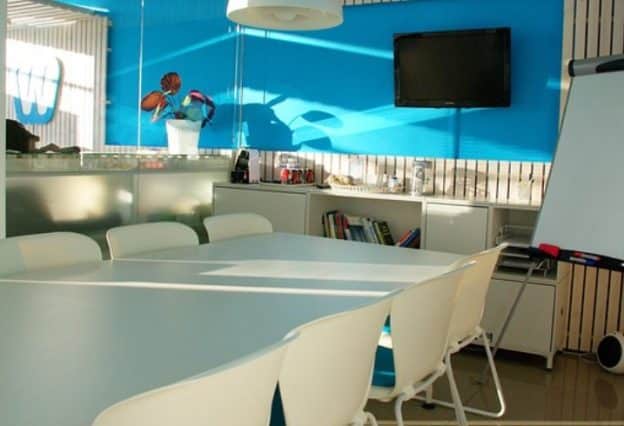
Setting up a new office is one of the few moments a company gets to make a strong first impression, on new hires, on visiting clients, and on the surrounding business community. Most of the planning attention goes toward furniture, signage, and layout. Fewer companies think about the smaller details that shape how a space actually feels once people start walking through the door.
One of those details is how a company presents itself through everyday items, the things clients pick up in a lobby, the welcome packet a new employee finds on their first day, or the small gift left in a conference room before a big meeting. These touches don’t cost much relative to the rest of a move, but they do a disproportionate amount of work in making a new space feel intentional rather than half-finished.
First Impressions Start Before the Meeting Does
Anyone who has sat in a client’s reception area knows the feeling of judging a company by its waiting room. The same instinct applies to a company’s own office. A new space with bare walls and no personality reads as unfinished, even if the actual business operations inside are running smoothly.
This is where thoughtfully chosen promotional products can quietly do a lot of the branding work. A notebook and pen set on a conference table, a branded mug in a break room, or a small welcome kit for visitors signals that a company has put real thought into its new environment. None of it needs to be expensive. It needs to be consistent with how the company wants to be seen.
Welcoming New Hires Into a New Space
Office moves often coincide with hiring pushes, since companies frequently relocate because they’ve outgrown their old space. New employees starting in a brand-new office face a slightly different onboarding experience than those joining an established team in a familiar building. Everything is new to everyone, which can feel disorienting without small anchors of identity.
A simple welcome kit, water bottle, notebook, desk organizer, goes a long way toward making a new hire feel like part of something established rather than something still being figured out. Many companies handle this by ordering promotional products in bulk ahead of a move, timing delivery to coincide with the first week in the new space so every new hire’s first day includes something tangible from the company itself.
Client Meetings in a New Space Need Small Gestures
The first several months in a new office are also usually when a company hosts the most client visits, partners and prospects wanting to see the new setup, existing clients touring the updated space. These meetings are a chance to reinforce brand identity in small, low-pressure ways.
Leaving a small branded item at each seat before a meeting, a notepad, a pen, a reusable cup, costs very little but signals attention to detail. It also gives visitors something physical to carry out of the building, which keeps the company top of mind long after the meeting ends. Businesses that plan ahead often coordinate a small batch of promotional products specifically for this transition period, timed to launch alongside the new office rather than ordered as an afterthought once the space is already in use.
Building Culture Around a New Location
Beyond clients and new hires, a move is also a moment that shapes internal culture. Teams that relocate together often use the transition to reset habits, celebrate the milestone, and mark the beginning of a new chapter. Small branded items, t-shirts for a move-in day event, tote bags for the first team lunch in the new space, water bottles left at each desk, help turn a logistical event into something people actually remember fondly.
This matters more than it might seem. Employees who feel a sense of ownership and pride in a new space tend to settle in faster and engage with it more positively than those who experience the move as pure disruption. Something as simple as promotional products handed out on move-in day can shift that entire experience.
Keeping It Consistent, Not Excessive
None of this requires a large budget or an elaborate campaign. The goal is consistency: choosing a handful of well-made items that reflect the company’s actual brand, rather than ordering a wide assortment of forgettable trinkets. A few thoughtfully chosen pieces, used consistently across client meetings, new hire kits, and office milestones, do more for brand perception than a drawer full of items nobody remembers picking up.
FAQ
What are the most useful promotional products for a new office space?
Items with everyday utility tend to perform best: notebooks, pens, mugs, water bottles, and desk organizers. These get used regularly rather than tucked away, which keeps the branding visible over time.
Should promotional products be ordered before or after moving into a new office?
Before, ideally. Ordering ahead of the move allows a company to have welcome kits and client items ready on day one, rather than scrambling to source them after the space is already occupied.
Is it worth spending on branded items for a small office move?
Yes. The cost per item is typically low, and the impact on new hire onboarding and client perception doesn’t scale directly with office size. Small teams benefit from the same first-impression effect as larger ones.
How do companies avoid promotional items feeling like clutter?
By keeping the selection narrow and functional rather than broad. A few well-chosen, reusable items consistently branded across the office tend to feel intentional, while a wide assortment of one-off giveaways tends to feel like clutter.
