
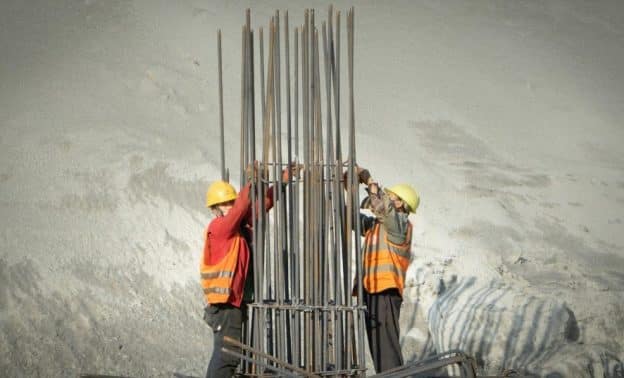
The construction industry is in the middle of a quiet revolution. From the way we lay foundations to how we seal and insulate buildings, new technologies are replacing outdated methods that cost builders time, money, and unnecessary headaches.
For decades, construction in this country followed a fairly predictable playbook: pour concrete, wait for it to cure, frame the walls, stuff in some batts, and hope everything holds up against the climate.
Today, smarter alternatives are emerging that deliver stronger results in less time, with fewer materials wasted along the way.
The Foundation Problem Nobody Talks About
A building is only as good as what it sits on, yet foundation work has traditionally been one of the most disruptive and time-consuming phases of any construction project.
Concrete bored piers have long been the default choice, but they come with well-known pain points that builders and developers are increasingly unwilling to accept.
The process typically involves heavy excavation equipment, significant soil displacement, and a mandatory curing period before any load can be placed on the piers.
On sites with challenging soil conditions, high water tables, or tight access, these complications multiply, and project timelines stretch far beyond what anyone planned for.
How Screw Piles Are Rewriting the Rules
Steel screw piles have emerged as one of the most significant innovations in foundation technology.
These systems feature a central steel shaft with helical or twin-blade plates that are mechanically driven into the ground, reaching stable soil layers without the need for large-scale excavation or concrete pouring.
The advantages are hard to ignore. Screw piles deliver immediate load-bearing capacity the moment they’re installed, which means there’s no waiting around for concrete to set before moving to the next phase of construction.
This speed advantage alone can shave days or even weeks off a project timeline. For residential builders working on tight schedules and commercial developers managing multi-stage projects, that kind of efficiency translates directly into cost savings and faster handovers.
Versatility Across Project Types
Screw piles aren’t limited to a single type of build. They’re now used across residential homes, commercial buildings, industrial warehouses, and infrastructure projects like bridges and retaining walls.
The technology adapts well to varied soil conditions, from the sandy coastal soils of Queensland to the reactive clay ground common across Victoria.
As an example, a reputable screw pile contractor in Melbourne will typically conduct thorough soil testing before designing a customized piling solution that matches the specific load requirements and ground conditions of each site.
The Environmental Edge of Modern Piling
Sustainability is no longer a nice-to-have in construction; it’s becoming a baseline expectation from regulators, clients, and communities alike.
Concrete production is one of the most energy-intensive industrial processes on the planet, and traditional piling methods consume large volumes of it.
Steel screw piles offer a measurably greener alternative. They cause minimal soil disturbance during installation, produce virtually no spoil that needs to be carted away, and the steel itself is fully recyclable at the end of its service life.
The Insulation Gap in Buildings
While foundation technology has leapt forward, insulation is another area where outdated practices have persisted for far too long.
Many buildings, both old and new, still rely on traditional batt insulation that can leave gaps, sag over time, and fail to create the airtight thermal envelope that modern energy standards demand.
This matters more than most people realize. Uninsulated or poorly insulated wall cavities can account for a significant portion of a building’s total heat loss or gain, driving up energy costs and making indoor environments uncomfortable regardless of how much the air conditioning runs.
Spray Foam Changes the Game
Spray polyurethane foam insulation has emerged as a powerful answer to the shortcomings of conventional insulation methods.
Unlike batts that are cut to fit and wedged between studs, spray foam is applied as a liquid that expands rapidly to fill every gap, crack, and irregular space within a wall cavity or structural void.
The result is a seamless, self-supporting insulation layer that bonds directly to the surrounding surfaces.
Closed-cell spray foam in particular delivers impressive thermal resistance with high R-values, while simultaneously acting as an air barrier and a moisture-resistant layer, three jobs handled by a single application.
Solving Compliance Challenges in Commercial Spaces
One area where spray foam technology is proving especially valuable is in commercial and industrial compliance.
Standards require that walls in certain commercial environments, such as food preparation kitchens, be of solid construction to meet hygiene and safety regulations.
For businesses operating in older buildings or retrofit spaces, meeting these standards with traditional methods can mean tearing out walls and starting from scratch.
Void filling spray foam insulation offers a far less disruptive path to compliance, allowing contractors to inject expanding foam into existing wall cavities through small access points without removing cladding or plasterboard.
Retrofit Applications Without Demolition
The beauty of injectable spray foam is that it works within the existing structure. Small holes are drilled into the wall surface, foam is injected under controlled pressure, and the access points are patched afterwards with minimal visible trace.
This approach is a game-changer for occupied buildings where shutting down operations for major renovation work simply isn’t practical.
Offices, restaurants, retail spaces, and industrial facilities can all benefit from cavity filling without the disruption, dust, and downtime of a full-scale refurbishment.
Thermal Performance Meets Structural Benefit
Beyond its insulation properties, closed-cell spray foam adds a degree of structural rigidity to the surfaces it bonds with. This dual function means that walls filled with spray foam don’t just perform better thermally, they also become more resistant to racking and vibration.
In regions prone to severe weather or in buildings exposed to heavy equipment vibrations, this added structural benefit provides a layer of resilience that traditional batt insulation simply cannot offer. It’s a practical advantage that engineers and specifiers are increasingly factoring into building design.
When Foundation and Insulation Technologies Work Together
The real transformation in construction happens when these modern technologies are used in combination rather than isolation.
A project that starts with efficient screw pile foundations and follows through with high-performance spray foam insulation is delivering better outcomes at every level: structural, thermal, and financial.
Builders who adopt both technologies often report shorter overall project timelines because neither the foundation phase nor the insulation phase creates the bottlenecks that traditional methods impose.
The cumulative time saved across these two stages alone can make a meaningful difference to project profitability.
What This Means for the Future of Building
The construction industry is not known for embracing change quickly, but the economics of modern technologies are becoming too compelling to ignore.
Screw piles eliminate curing delays and reduce environmental impact, while spray foam insulation delivers superior thermal performance in a single, fast application.
As energy performance standards tighten and sustainability requirements increase, these technologies are shifting from optional upgrades to essential building practices.
For builders, developers, and property owners who want to stay ahead of the curve, the message is clear: building smarter isn’t just possible, it’s already happening.
