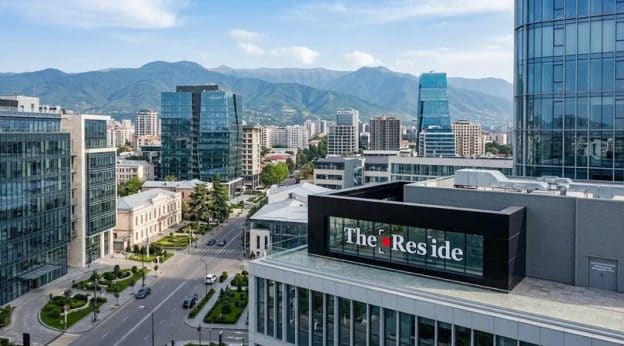
For international companies weighing Georgia as a new operating base, the office decision often arrives early and carries more weight than expected. A founder may need a registered address and a small team room within weeks. A shared-service operation may need 100 seats, reliable power, and a lease that allows growth. In both cases, comparing listings by advertised rent per square meter tells only part of the story.
Finding office space in Tbilisi means judging districts, building quality, service charges, technical infrastructure, lease flexibility, and how the team will actually use the space. This guide walks through those decisions from a tenant’s perspective, whether the choice is a conventional lease, a serviced office, or coworking.
How Tbilisi’s Office Market Is Changing
Many local businesses long operated from converted apartments and small mixed-use buildings. That is shifting as IT firms, financial services, BPO and shared-service centers, consultancies and international companies look for space that meets corporate standards for security, engineering and presentation.
Supply is growing, but tenants should separate total office floor area from institutional-grade stock. According to Cushman & Wakefield | Veritas, Tbilisi’s modern office stock grew to about 260,000 m² in 2025, up 7% year on year, with Class A and B weighted average rents at $26 per m² and vacancy at roughly 9%. The same research noted around 105,000 m² under construction and early signs of development spreading beyond established submarkets. Other firms define stock and building classes differently, so figures from different reports should not be merged into a single number.
The market is also tiered. Premium buildings compete on specification and address, mid-market Class B space has improved noticeably in quality, and simpler offices remain common. The gap between classes shows up in engineering, management and service costs, not only in headline rent.
Evaluate Tbilisi by submarket, building class and total occupancy cost, not by a single citywide average rent.
Choose the Right Office Model
Conventional Lease
A direct lease suits companies with stable headcount, a multi-year horizon and a need to control layout, branding and security. It usually requires more upfront capital and management time.
Serviced Office
Serviced offices work well for fast market entry, small international teams, representative offices or a test period. Furniture, internet, reception and cleaning are typically bundled.
Coworking and Flexible Space
Coworking fits startups, distributed teams, project groups and companies with uncertain headcount, though privacy and brand control are limited.
| Workspace model | Typical commitment | Fit-out responsibility | Flexibility | Best suited for | Main risk to check |
|---|---|---|---|---|---|
| Conventional lease | Multi-year | Usually tenant, subject to negotiation | Low to moderate | Stable, growing teams | Exit and reinstatement costs |
| Serviced office | Months to a year or two | Operator | High | Market entry, small teams | Extra fees and renewal pricing |
| Coworking | Monthly | Operator | Very high | Startups, project teams | Privacy and data security |
Flexible space often costs more per workstation. At entry, though, it can be cheaper overall because the company avoids fit-out, furniture, utility setup, reception staff and a long commitment. The right comparison is total cost over the realistic period of use. Before purchasing any real estate in Georgia, it is recommended to take a “test drive”: spend a few weeks in the area to see how comfortable you feel there.
Where to Look in Tbilisi
Tbilisi does not have one tightly defined CBD. Office activity is spread across several business corridors, and research on the market in 2025 found quality Grade A and B+ demand concentrated in Vake and Saburtalo.
Vake
Vake offers premium positioning, modern business centers and a strong client-facing image. Expect higher costs and competition for quality floors.
Saburtalo
A large mixed business and residential submarket, Saburtalo combines metro access, major road corridors and a range of business centers and other formats.
Mtatsminda and Central Areas
Central locations carry prestige, but modern large-floorplate options can be limited, and parking or vehicle access depends heavily on the specific building.
Emerging Districts
Isani, Dighomi and other developing areas may suit companies that prioritize cost, newer construction or employee commutes over a prestige address.
| Area | Office profile | Strengths | Potential trade-offs | Good fit for |
|---|---|---|---|---|
| Vake | Premium business centers | Image, quality stock | Higher costs, traffic | Client-facing firms |
| Saburtalo | Mixed, broad range | Metro, choice of formats | Uneven building quality | IT and growing teams |
| Central areas | Older and boutique stock | Centrality, prestige | Parking, limited floorplates | Small representative offices |
| Emerging districts | Newer developments | Cost, new construction | Fewer amenities nearby | Back-office teams |
Calculate the Real Occupancy Cost
Advertised rent is only one line. Service charges, utilities and parking add recurring costs, while fit-out, furniture, IT infrastructure and move-in expenses hit upfront. Georgia’s standard VAT rate is 18%, but whether VAT applies to a quote depends on the landlord’s status and the contract, so confirm whether figures are VAT-inclusive.
Lease economics also depend on deposits, possible brokerage or representation fees, reinstatement obligations at exit, annual indexation and currency clauses. Rent is often quoted with reference to USD, which shifts exchange-rate risk onto a tenant earning in another currency. Expansion costs matter too: moving twice in three years can cancel a low rent.
Costs to Put Into Your Comparison Sheet
- Base rent and whether VAT is included
- Service charge and what it covers
- Utilities, cleaning and security
- Parking spaces and visitor parking
- Fit-out, furniture and IT setup
- Deposit and advance payments
- Indexation and currency adjustment terms
- Reinstatement costs at lease end
Then calculate effective occupancy cost: total all recurring and one-off costs across the expected term, subtract any negotiated incentives, and divide by months and by workstations or square meters. This makes a serviced suite, a shell-and-core lease and a coworking membership comparable.
Inspect More Than the Office Suite
A polished interior can hide weak engineering. Check HVAC capacity, backup power, internet providers and redundancy, elevator capacity at peak hours, access control, fire safety and emergency exits. Assess building management, common areas, toilets, accessibility, noise, natural light and after-hours access. Delivery logistics and planned construction nearby can also affect daily operations.
Questions to Test During a Viewing
- What does backup power cover, and for how long?
- Which internet providers serve the building?
- How are HVAC hours and after-hours cooling charged?
- How long are elevator waits at 9 a.m.?
- Who manages the building, and how fast are repairs handled?
- What fire safety systems and approvals are in place?
- How many parking spaces come with the lease?
- Is construction planned on neighboring plots?
A good fit-out does not compensate for poor building infrastructure.
Negotiate the Lease Before the Layout
International tenants should review commercial terms before committing to a floorplan. Key points include lease term, commencement date, any fit-out or rent-free period (a negotiation point, not a given), deposit, renewal options, break clauses and expansion or contraction rights. Assignment and sublease rights, permitted use, landlord works, tenant improvements, repair duties, insurance and building rules deserve equal attention.
Financial mechanics need clarity: service charge reconciliation, indexation, late payment, default and termination. On currency, domestic prices in Georgia are generally set and paid in lari, although contracts commonly peg amounts to a foreign currency; confirm the conversion rate and date. Reinstatement at exit can be costly if undefined.
A Letter of Intent or term sheet is not a substitute for reviewing the final contract. Drafts can drift from agreed terms, so have a Georgian lawyer and tax adviser review the lease. This article is general information, not legal advice.
A favorable rate does not offset a lease that blocks growth or makes early exit prohibitively expensive.
Match the Space to Your Team
Multiplying headcount by a standard area per person rarely works. Hybrid schedules lower daily attendance, while video calls increase demand for quiet rooms and small meeting spaces. Private offices, reception, storage, collaboration zones, visitors and client meetings all change the layout.
Build the Brief Before Touring
- Current and projected headcount
- Expected daily attendance
- Private offices versus open desks
- Meeting and call room needs
- Client and visitor frequency
- IT, security and storage requirements
- Commuting patterns of staff
Location should also reflect where employees live. Companies relocating key staff to Tbilisi long term sometimes review office options alongside suitable residential neighborhoods and long-term housing.
A Practical Tbilisi Office Checklist
- Confirm headcount, growth plans and working model.
- Set an all-in budget, not a rent target.
- Shortlist two or three districts.
- Decide between conventional and flexible space.
- Tour and compare several buildings.
- Verify power, connectivity, HVAC and safety.
- Model effective occupancy cost over the term.
- Negotiate key commercial terms.
- Complete legal, tax and technical due diligence.
- Agree fit-out and move-in responsibilities in writing.
- Sign only when final documents match negotiated terms.
Frequently Asked Questions
Is office space in Tbilisi expensive?
It depends on building class, district, fit-out and included services. Premium space in established submarkets costs considerably more than simpler offices elsewhere, and service charges vary widely. Averages published by research firms are useful context, but methodologies differ. Compare total occupancy cost for the specific buildings on your shortlist rather than relying on a single citywide figure.
Which Tbilisi districts have the most modern offices?
Much of the quality stock is concentrated in Vake and Saburtalo, with additional options in central areas and newer developments in emerging districts. Because Tbilisi has several business corridors rather than one CBD, the right area depends on your clients, staff commutes, budget and building requirements.
Should a foreign company choose coworking first?
Coworking or serviced space can reduce upfront spending and commitment while a company tests the market and hires. The limits are privacy, branding, data security and renewal pricing. Many firms start flexibly and move to a conventional lease once headcount stabilizes, but this is a planning choice, not a rule.
What additional costs come with office rent?
Common extras include service charges, utilities, parking, VAT where applicable, deposits, fit-out, furniture, IT setup, cleaning, security, indexation and reinstatement at exit. Some professional representation or brokerage fees may also arise. Ask each landlord or operator for a written breakdown.
Can office rent be linked to USD or EUR?
Lease amounts in Georgia are often pegged to USD or EUR, while domestic payments are generally made in lari at an agreed exchange rate. Rules and exceptions depend on the parties and transaction, and regulations can change. Confirm the currency mechanism, rate source, and payment date with a Georgian lawyer or accountant before signing.
What should an international tenant check before signing?
Review both the building and the contract: engineering systems, power backup, connectivity, safety, management quality, break and expansion rights, service charges, indexation, currency terms and reinstatement duties. Legal and tax review should reflect your company’s structure.
Conclusion
Entering Tbilisi is less about finding the cheapest square meter than about choosing space that supports how the business will operate. Location affects hiring and client access. Building quality determines whether power, connectivity, and climate control hold up. Lease flexibility decides whether growth or a change in strategy becomes a routine adjustment or an expensive problem.
Companies that define their brief early, model full occupancy costs, inspect infrastructure closely, and review contracts with local advisers are better positioned to make an office decision that still fits several years after the move.