
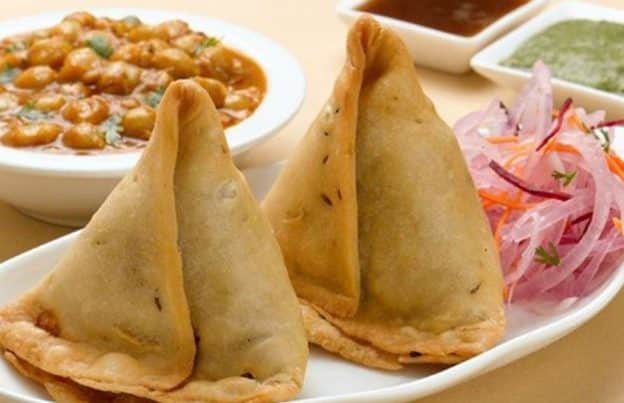
In the fast-moving consumer market, expanding a business to over 50 outlets is an impressive achievement. However, doing so while keeping prices incredibly low for the lower-middle-class demographic transforms a simple business growth story into a major market disruption. This is the precise achievement of City Samosa, a brand originating from Thane, Maharashtra, that has reshaped the organized snacking market.
While many fast-food chains prioritize akun slot gacor high margins or luxury dining spaces, City Samosa built its entire business blueprint on three foundational pillars: Quality, Affordability, and Franchise Speed. By balancing these core components, the brand has created an attractive, highly repeatable business template that continues to attract ambitious entrepreneurs across the country.
1. Uncompromising Quality Through Mechanical Discipline
The primary challenge of legacy street food in India is inconsistency. A roadside snack might taste spectacular one afternoon and disappointing the next, depending entirely on the vendor’s fresh ingredients or mood. City Samosa removed human error from the culinary process by shifting production to a semi-automated factory environment.
At the central factory hub, advanced machinery handles the heavy lifting—processing massive daily quantities of raw ingredients, kneading uniform dough sheets, and blending precisely measured spice mixes. This industrial rigor ensures that the structural integrity and flavor profile of the snacks remain perfectly uniform across all operational branches.
Furthermore, by utilizing food-grade stainless steel equipment and maintaining a controlled environment, the brand guarantees safety and cleanliness. This systematic approach allows health-conscious urban diners to enjoy traditional comfort food with complete peace of mind.
2. Democratizing the Market Through Value Engineering
Affordability is often misunderstood as simply using cheaper ingredients. City Samosa reconfigured this concept entirely through economies of scale and smart value engineering. The brand’s driving mission was born out of a desire to keep India’s favorite comfort food completely accessible to everyday workers and families facing rising inflation.
By purchasing foundational materials like premium flour and custom spice mixes directly from trusted suppliers at a massive volume, the corporate office significantly lowers its unit cost. Additionally, because the retail outlets require a compact footprint (typically between 400 to 500 square feet) and minimal onsite kitchen staff, the monthly operational overhead remains remarkably low. These cumulative backend savings are passed directly to the consumer, allowing the brand to offer premium, hygienic snacks at prices that directly compete with informal street side stalls.
3. Designing for Rapid Franchise Deployment
A great product model is only as strong as its ability to replicate efficiently. City Samosa’s rapid expansion past 50 branches is the direct result of a “plug-and-play” franchise architecture designed for quick deployment and low operational friction.
- Low Skill Requirement: Because the core fillings and pastry sheets are manufactured centrally and shipped to branches, individual store owners do not need to hire highly paid, specialized chefs. Local operators only handle the straightforward process of assembly, flash-frying, and customer service.
- Rapid Return on Investment (ROI): With a transparent, lower upfront investment structure compared to major international chains, new outlets are positioned to achieve financial break-even quickly, often within a single year.
- Comprehensive Turnkey Support: The corporate team provides structured manuals, point-of-sale IT applications, staff training programs, and ongoing marketing assistance. This end-to-end guidance ensures that a new store can transition from a blueprint to a grand opening seamlessly.
The Ultimate Growth Blueprint
The enduring success of City Samosa proves that long-term brand equity is built by solving real consumer pain points. By taking a centuries-old snacking tradition, modernizing its hygiene standards, and packaging it with efficient corporate logistics, City Samosa created a highly scalable quick-service business opportunity.
The brand demonstrates that when you systematically align product quality, accessible price points, and smooth operational speeds, you don’t just build a successful fast-food company—you create a nationwide culinary movement.
