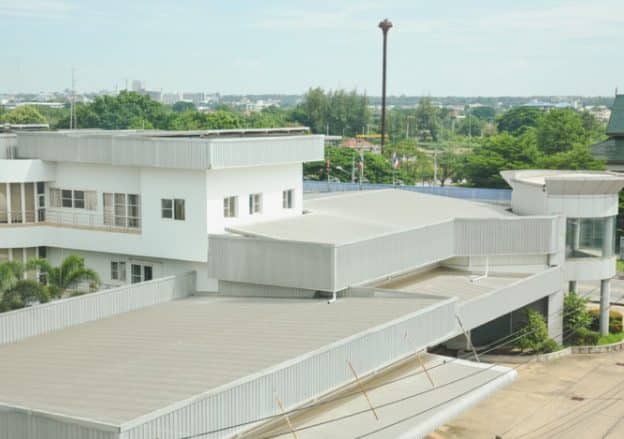
Choosing the right roofing material for a commercial property is a critical decision for property owners and managers.
With various commercial roof types available, it’s essential to understand the benefits, limitations, and lifespan of each to make an informed decision.
In this guide, we’ll explore the different types of commercial roofing, from traditional systems to modern innovations, helping you select the best option for your needs.
1. Built-Up Roofing (BUR)
Built-up roofing (BUR) is a classic commercial roofing system, often referred to as “tar and gravel.” It consists of multiple layers of asphalt-saturated felt, sealed together with bitumen. Mineral or gravel granules are often added for protection.
Advantages:
- Durability: BUR roofs are known for their long-lasting performance.
- Waterproofing: Multiple layers provide excellent water resistance.
- Foot traffic resistance: Suitable for areas with frequent maintenance access.
Disadvantages:
- Installation time: BUR installation can take longer than other roofing options.
- Heavyweight: The layers of felt and bitumen make this roof system heavier, requiring a more robust structure.
2. Metal Roofing
Metal roofing is a popular choice for commercial buildings due to its longevity, low maintenance, and modern appearance. It is available in various materials, including steel, aluminum, and copper, each with its own set of benefits.
Advantages:
- Longevity: Metal roofs can last 40 to 70 years with proper care.
- Energy efficiency: Reflects sunlight, reducing cooling costs.
- Resistant to fire, wind, and hail: Metal roofs are extremely durable in severe weather conditions.
Disadvantages:
- Cost: Initial installation costs can be higher than those of asphalt or single-ply options.
- Noise: Metal roofs may be noisier during rain or hail unless properly insulated.
3. Single-Ply Membrane Roofing
Single-ply membrane roofing is a lightweight, flexible roofing material that’s easy to install. This includes options like TPO (thermoplastic polyolefin), PVC (polyvinyl chloride), and EPDM (ethylene propylene diene terpolymer).
Advantages:
- Easy to install: Single-ply membranes are lightweight and can be quickly applied, reducing labor costs.
- Energy efficiency: Many of these systems are highly reflective, helping to lower energy bills.
- Flexibility: EPDM is especially adaptable for buildings with various shapes or slopes.
Disadvantages:
- Vulnerability to punctures: Some single-ply membranes can be more prone to damage from foot traffic or sharp objects.
- Shorter lifespan: Compared to metal or BUR systems, some single-ply membranes may last a little less, generally 15–30 years.
Modified Bitumen Roofing
Modified bitumen roofing is an upgraded version of traditional BUR, incorporating APP (atactic polypropylene) or SBS (styrene-butadiene-styrene) for enhanced flexibility and weather resistance.
Advantages:
- Weather-resistant: Offers better flexibility and resistance to extreme temperatures compared to standard asphalt.
- Easy to maintain: Repairing or replacing sections of modified bitumen is relatively easy.
Disadvantages:
- Installation complexity: Requires skilled contractors to apply properly, especially during hot asphalt installation.
- Potential for wear: While durable, modified bitumen can eventually show wear in high-traffic areas.
5. Green Roofing
Green roofs, or living roofs, are covered with vegetation and are designed for sustainability. These roofs can be installed on commercial buildings to help with stormwater management, improve insulation, and increase the overall green space of the property.
Advantages:
- Energy efficiency: Provides excellent insulation, reducing heating and cooling costs.
- Environmental benefits: Helps manage stormwater, improves air quality, and creates habitat for wildlife.
- Aesthetic appeal: Adds a unique, eco-friendly look to any building.
Disadvantages:
- High cost: Installation can be expensive due to the specialized systems and structural support required.
- Maintenance: Requires ongoing care and upkeep to ensure the health of the vegetation.
Conclusion: Which Commercial Roofing System Is Right for You?
When it comes to commercial roof replacement, it’s important to consider factors like building size, climate, budget, and desired lifespan.
For those looking for durability and energy efficiency, metal roofing and green roofing are top choices.
For budget-conscious options, single-ply membranes and modified bitumen provide effective and long-lasting solutions.
Each roofing material has its pros and cons, so choosing the right one will depend on the specific needs of the building and the climate it’s located in.