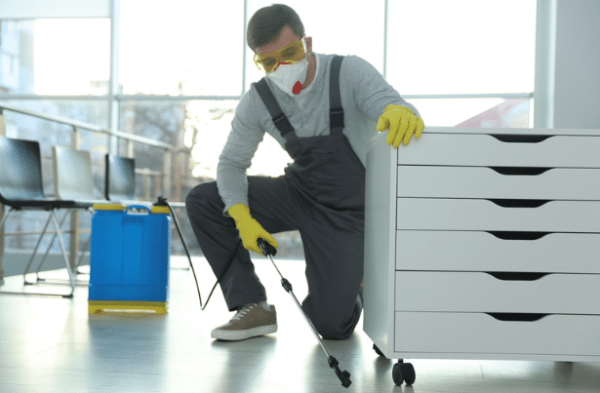
Spotting a pest in a private home is straightforward enough. The homeowner decides how to respond, and there is little confusion about who is responsible for the outcome. A multi-tenant office building works differently. A single cockroach sighting in a shared kitchen or a trail of ants near a hallway entrance can involve several parties at once, and figuring out who is actually responsible for addressing it is not always obvious to the tenant who noticed the problem first.
This confusion is common, and it often delays a response simply because no one is sure whether the issue belongs to their suite, the building’s shared spaces, or property management as a whole. Understanding how responsibility is typically divided in these buildings helps tenants respond faster and more effectively when a problem does appear.
How Pest Issues Move Through Shared Office Spaces
Pests do not recognize the boundaries between individual suites, and that is part of what makes shared office buildings more complicated than standalone properties. A cockroach problem originating in a ground-floor restaurant tenant can move upward through shared utility chases and eventually surface in an office suite several floors above. Ants foraging from a colony near a building’s exterior can enter through any suite with an accessible gap, regardless of which tenant happens to occupy that space.
Shared kitchens present a particularly common source of building-wide pest issues. These spaces are used by multiple tenants throughout the day, and inconsistent cleaning habits from just one group can create conditions that affect everyone with access to the space. A few dishes left in the sink overnight, or crumbs left on a counter after a communal lunch, can be enough to draw cockroaches or ants into a shared kitchen that then serves as a gateway to individual suites nearby.
Hallways and shared waste areas function similarly. Waste rooms in particular tend to attract pests if they are not serviced regularly, and any pest population that establishes itself there has convenient access to every suite along that hallway. Tenants who notice activity in these shared areas are often dealing with a building-wide issue rather than something isolated to their own space, even if their suite is where the pest was first spotted.
Dividing Responsibility Between Tenants and Property Management
Lease agreements typically outline pest responsibility in some form, though the level of detail varies considerably from one building to another. In general, tenants are responsible for sanitation and maintenance within their own leased suite, including keeping break areas clean, storing food properly, and reporting any pest sightings promptly. Property management, meanwhile, usually holds responsibility for shared spaces such as hallways, shared kitchens, waste rooms, and the building’s structural and utility systems.
This division makes sense in principle, but it breaks down in practice when a pest problem crosses those boundaries, which happens more often than tenants might expect. A cockroach population that started in a building’s waste area and spread through shared plumbing chases into multiple suites is not something any single tenant can resolve on their own, even if they are diligent about their own space. In these situations, coordinated treatment across affected areas becomes necessary, and that coordination typically falls to property management working alongside a pest management provider.
Tenants who take the time to review their lease’s pest control language before a problem arises tend to navigate these situations more smoothly. Knowing in advance whether pest control services are the tenant’s responsibility, the landlord’s responsibility, or a shared cost built into common area maintenance fees removes a layer of confusion when an actual issue appears.
Documenting Sightings and Reporting Building-Wide Issues
A single pest sighting is easy to dismiss, but a documented pattern is much harder to overlook. Tenants who keep a simple record of sightings, including the date, location within the suite or building, and the type of pest observed, give property management a clearer picture of whether an issue is isolated or part of a larger pattern affecting multiple tenants.
This kind of documentation becomes especially useful when comparing notes with neighboring suites. A tenant who assumes their cockroach sighting is an isolated incident might discover, after a quick conversation with a neighbor, that another suite on the same floor has been dealing with a similar issue for weeks. That shared information often prompts property management to involve local pest control by Reliant Pest Management for a building-wide inspection rather than treating each report as a separate, unrelated event.
A practical documentation habit includes:
- Noting the date, time, and specific location of each pest sighting
- Taking a photo when possible, particularly for droppings, damage, or the pest itself
- Reporting sightings to property management promptly rather than waiting to see if they recur
- Checking with neighboring tenants to see whether similar activity has been reported elsewhere in the building
This approach gives property management the information needed to determine whether a treatment plan should focus on a single suite or extend across shared systems and neighboring spaces.
Maintaining Clean Workspaces as a Shared Responsibility
Even in buildings where pest control services are managed centrally, individual tenant habits still play a meaningful role in prevention. Food left out overnight, unemptied trash bins, and cluttered storage areas within a suite all create conditions that support pest activity, regardless of how well the building’s shared systems are maintained otherwise.
Simple habits go a long way here. Wiping down break room counters after use, storing snacks in sealed containers rather than open bags, and emptying trash regularly all reduce the chances that a single suite becomes the source of a building-wide problem. Suites that share a wall or utility chase with a restaurant or food-service tenant benefit from being especially diligent, since these neighboring businesses can introduce pest pressure that spreads regardless of how clean an individual office keeps its own space.
Tenants dealing with recurring activity despite consistent cleaning habits are often facing an issue that originates outside their own suite. In these cases, reaching out to local pest control by Reliant Pest Management for an inspection can help determine whether the source lies in shared utility systems, a neighboring tenant’s space, or a building-wide sanitation gap that individual cleaning efforts cannot resolve on their own.
Coordinating Treatment Across Affected Areas
When a pest problem does extend beyond a single suite, effective treatment usually requires coordination among several parties at once. Property management typically takes the lead on scheduling treatment for shared spaces, but tenants in affected suites often need to grant access during business hours and follow any preparation instructions provided ahead of a scheduled treatment.
Buildings that handle this coordination well tend to communicate clearly with all affected tenants at once, rather than treating each suite as a separate case. This kind of unified response is generally more effective than scattered, suite-by-suite treatment, since pests moving through shared systems will simply return to any suite that was left untreated during a partial effort.
Key Takeaways
Pest issues in multi-tenant office buildings rarely stay contained to a single space, which makes clear communication and defined responsibility more important than they might be in a standalone property. Tenants benefit from understanding which sanitation and reporting duties fall to them and which belong to property management, and from documenting sightings carefully enough to reveal patterns that might not be obvious from a single suite’s perspective. Addressing these issues effectively usually depends on treating the building as a connected system rather than a collection of separate spaces, particularly when shared kitchens, waste areas, or utility systems are involved.