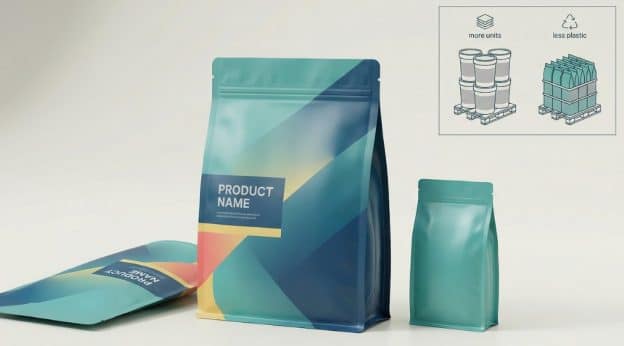
Shoppers judge products long before they twist the cap. In an Ipsos survey, 72 percent of Americans said packaging design shapes what they pick up—and ultimately buy. That makes your bottle, pouch, or blister card the brand’s real first handshake in a crowded aisle.
In the post ahead, we’ll help you choose that handshake wisely. Follow a simple decision path that pairs nine proven packaging formats with the goal that matters most to you—speed, safety, sustainability, or sheer shelf pop. By the end, you’ll know exactly which design deserves space on store shelves and why.
Start here: follow the retail-ready decision path
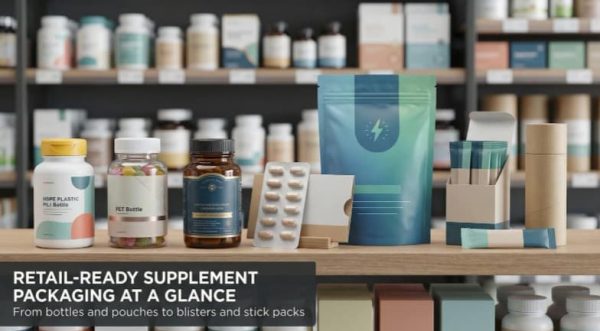
Think of this next step as a fork in the road, not a wall of options. We’ll walk through five quick checkpoints. Once one resonates, jump to its matching formats later in the article.
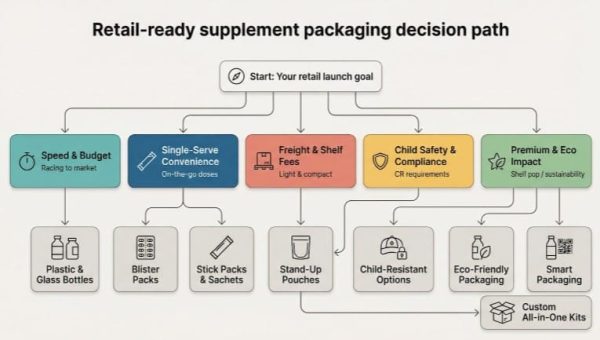
Checkpoint 1: racing to market on a tight budget? Order stock plastic or glass bottles—they’re proven, inexpensive, and every co-packer can fill them fast.
Checkpoint 2: selling single-dose convenience? Blister packs or slim stick sachets deliver grab-and-go portions that busy shoppers appreciate.
Checkpoint 3: slashing freight and shelf fees? Stand-up pouches ship flat, weigh almost nothing, and still give you a billboard-size front panel.
Checkpoint 4: facing strict child-safety rules? Choose certified child-resistant bottles, pouches, or blisters to satisfy regulators and reassure retailers.
Checkpoint 5: aiming for next-level shelf pop—or eco credentials? Custom all-in-one kits, fully recyclable mono-material pouches, and smart scan-for-proof labels separate premium players from the pack—and often justify a higher price.
Lock onto the checkpoint that fits your launch plan, then flip to its formats below. You’ll see the pros, watch-outs, and cost math spelled out so you can act with confidence.
In the next section we tackle Checkpoint 1 head-on, starting with the workhorse plastic bottle.
Plastic pill bottles: the quick-launch workhorse
Walk any pharmacy aisle and you’ll see why we start here. White HDPE and clear PET bottles dominate shelves because they deliver the retail trifecta: speed, safety, and price.
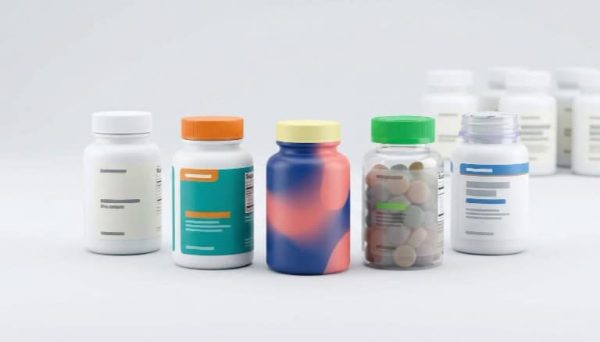
You can order stock bottles today, apply a label tomorrow, and ship finished goods by the weekend. That agility matters when a buyer says, “We’ll trial you next month if you can deliver.”
The unit economics are tough to beat. A 150-cc HDPE bottle with a child-resistant cap and foil seal often costs $0.20–$0.30 at a 10,000-piece run. Labels add pennies. Tooling fees? Zero, because the molds already exist. The catch is scale: many suppliers won’t break a case below about 5,000 pieces, so plan cash flow accordingly or lean on a co-packer’s pooled inventory.
Protection is solid, not perfect. Opaque HDPE blocks light, and PET gives shoppers a candy-jar peek at gummies while still limiting moisture. Drop in a desiccant and an induction seal, and most vitamins stay potent well past the printed date. Truly oxygen-sensitive probiotics may need tinted PET or an oxygen absorber, but the base bottle rarely changes.
Compliance is almost automatic. The round body leaves plenty of space for Supplement Facts, warnings, and a UPC. Add a certified push-and-turn cap and you satisfy child-safety rules for iron tablets or CBD formulas without re-engineering the whole pack. Tamper evidence comes free with that foil liner and an optional neck band, both standard on most filling lines.
Shelf appeal, however, is on your shoulders. A sea of identical cylinders can blur together, so invest in label design. Play with color, varnish textures, or full shrink sleeves that wrap 360 degrees. Some brands even select custom cap colors to create fast visual cues—think Nature Made’s yellow lid or Olly’s pastel tops. Small tweaks turn a commodity bottle into a billboard.
Bottom line: when you want retail-ready packaging that buyers already trust, plastic pill bottles are the no-drama launch pad. They free budget for marketing and scale as fast as your sales forecast.
Glass bottles and jars: premium look, rock-solid barrier
Switch shelves and moods change fast. Swap plastic for amber glass and the same vitamin immediately feels like an apothecary-grade formula.
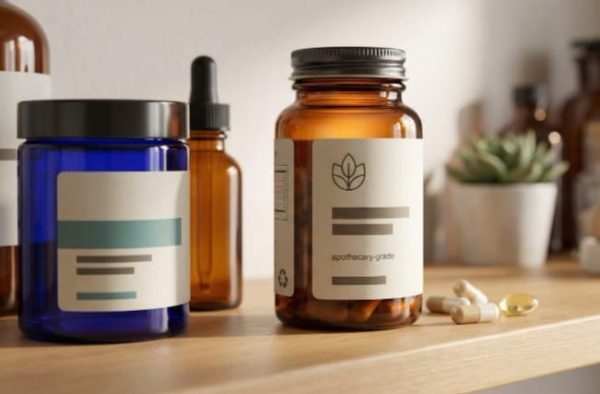
That perception boost is half the pitch. Glass signals purity, longevity, and, let’s be honest, a higher price. The weight in a shopper’s hand confirms the contents are worth paying more for. When you target natural grocers or boutique wellness stores, that tactile quality often clinches the line review.
Performance backs the polish. Glass is inert, blocking oxygen and moisture better than most plastics. Pair it with a desiccant cap to safeguard finicky actives such as probiotics or omega oils. Amber glass blocks up to 99 percent of UV rays, while cobalt blue offers moderate protection, extending shelf life without extra additives.
Retailers value glass for another reason: it screams tamper-evident when paired with a metal lug cap or pressed safety seal. Any breach is obvious. Add a certified push-and-turn top to meet iron or CBD safety rules in one step.
Drawbacks start on the loading dock. Glass is heavy and breakable, so freight rises and each master case requires dividers and cushioning. Those materials add pennies per unit that appear only after the pallet ships. Factor in potential insurance claims; a single dropped case can erase margin on a small run.
Cost per container is higher, usually two to three times a comparable plastic bottle at mid-scale, yet minimum orders are often friendlier. Many domestic molders sell pharma rounds in batches of a few thousand, allowing you to test a premium SKU without locking up a full overseas container.
If sustainability matters, glass checks the box. It is endlessly recyclable and sidesteps the micro-plastic debate. Keep the story consistent, though; shrink sleeves with metallic inks can undermine recyclability.
Choose glass when your formulation or brand story should whisper “lab-tested” and “luxury” at the same time. You will pay more in freight and padding, but the shelf presence and barrier protection can repay the investment through faster turns and higher consumer trust.
Blister packs: unit-dose clarity and tamper-proof confidence
Pop one pill and the rest stay factory fresh. That single benefit explains why pharmacists, airlines, and now supplement shoppers trust blister cards.
Each capsule sits in its own airtight pocket, sealed with foil that blocks light, oxygen, and moisture. The dose stays pristine until a shopper presses it through. That extra protection matters for probiotics and other humidity-sensitive actives that degrade every time a bulk bottle opens.
The design doubles as obvious tamper evidence. A torn cavity shouts “don’t buy me,” so retailers worry less about theft or product swaps. For child safety, switch to a peel-push format that passes Poison Prevention tests without extra bulk.
Blister cards also work as pocket billboards. You can print a regimen—Monday to Sunday, AM versus PM—right on the card. That guidance nudges adherence and gives shoppers a visual plan that bottles cannot match.
Expect higher costs than bottling. Thermoforming, foil, and an outer carton add up to about $0.10–$0.20 per cavity at mid-scale. Factor in specialized machinery or a co-packer that runs blister lines.
Logistics are mixed. Flat cards stack tight and trim freight weight, yet they call for a secondary carton or hanging clip to stand upright on shelf. Plan that outer package early to avoid scramble mode during buyer reviews.
Use blisters for high-value pills that deserve individual protection, or when a clear daily schedule can drive repeat sales. They are not the cheapest route, but the tidy row of sealed doses instantly elevates a formula from commodity to clinic grade.
Stick packs and sachets: grab-and-go doses that travel light
Picture a shopper tossing a gym bag together at 6 am. No one hoists a one-pound tub; they grab a slim stick of electrolyte powder, tear, pour, and move. That ritual explains why single-serve packets dominate hydration and collagen categories.
A stick pack acts as a billboard in a pocket-size wrapper. Foil laminates block oxygen and humidity, so even hygroscopic actives like vitamin C stay potent during a summer road trip. Twenty or thirty filled sticks slide into a printed carton that stands tall on shelf and whispers “daily habit” each time the lid flips open.
Retail advantages pile up quickly. Precise dosing prevents measuring errors and customer complaints. The outer box delivers five branding panels, far more than a bottle label, and retailers can face the box or peg individual sticks for impulse sales near checkout.
Cost math differs from tubs. Film often sits under five cents per stick, yet filling fees and carton assembly add labor. Packaging for a 20-count box lands around fifty to sixty cents before product, higher for matte finishes or spot foil. Setup minimums hover at ten thousand sticks per flavor because form-fill-seal lines run fast and dislike downtime.
Eco claims require care. Multilayer foil is not curbside recyclable, so brands chasing sustainability badges test mono-material PE films or paper-based sachets. These new substrates repel moisture less effectively, so run stability trials before committing.
Choose stick packs when convenience and sampleability outweigh raw ingredient cost. They excel in travel-friendly immune boosts, pre-workout shots, and any supplement mixed with water on the fly. Nail the flavor, and that first free sachet at a trade show can convert a lifelong subscriber faster than any billboard.
Stand-up pouches: feather-light freight, billboard-size branding
Meet the true shape-shifter of supplement packaging. When empty, a stand-up pouch lies flat as a magazine page. Once filled, the gusset opens, the bag stands tall, and you gain a front panel larger than most vitamin cartons.
That real estate changes merchandising. Designers can splash gradients, lifestyle photos, and QR codes without cramming text into a three-inch label. Shoppers spot the pack from six feet away, and retailers appreciate a face that stays forward without extra fixtures.
Pouches also slash logistics costs. Compared with the same volume in a rigid tub, you trim plastic weight by more than sixty percent and fit up to thirty percent more units per pallet. Those savings flow straight to margin or retail-price flexibility.
Barrier science keeps pace, but cost and versatility matter just as much. Packaging agency Zenpack notes that vitamin and supplement brands often ship a mix of one-time purchases and ongoing subscriptions, so pouches must protect product while staying efficient to fulfill. Its multi-layer pouch for NBA All-Star Jimmy Butler’s BIGFACE Coffee interleaves aluminum foil between PET and paper, preserving aroma while showcasing artwork that won an iF Design Gold Award in 2024. The project proves retail-ready pouches can meet stringent moisture and oxygen barriers without sacrificing shelf impact.
For extra stability, add a desiccant and rival most plastic jars on shelf life.
Sustainability still sparks debate. Standard laminates are not curbside recyclable, so eco-minded brands pivot to mono-material PE films or compostable PLA. Test thoroughly; greener films breathe more, and a clumpy greens powder cancels any marketing gain.
Unit cost improves with scale. A custom printed one-pound pouch with zipper costs about twenty-five to thirty-five cents at twenty-thousand pieces, and digital printers now offer one-thousand-unit runs for pilot launches.
Choose a pouch for bulk powders like plant protein or greens blends, refill programs that cut down on jars, or any product where bold shelf art and low freight beat glass-jar aesthetics. Add a matte varnish and a die-cut window, and your pouch looks as premium as it performs.
Child-resistant containers: when safety is the sale
Some supplements look like candy, others pack enough iron to harm toddlers. Many retailers reject any product unless the package passes a child-resistance test. Skip this spec, and you risk a recall plus empty shelves.
The good news: CR technology now fits almost every format. Classic push-and-turn caps suit HDPE and glass bottles with zero tooling cost. Flexible pouches carry press-to-slide zippers that lock until two motions line up. Even blister packs can switch to a peel-push foil that defeats curious fingers.
Certification is non-negotiable. Third-party protocols test real households and require at least eighty percent of children aged forty-two to fifty-one months to fail at opening within ten minutes while most adults succeed. Always request the report; buyers ask for proof.
Expect a modest cost bump—about five to ten cents per unit for a certified cap or zipper—yet weigh that against legal peace of mind and the trust signal on shelf. Parents notice the unique cap and feel safer choosing your melatonin gummies over an easy-open rival.
CR features also deter pilfering. Extra mechanisms make stealthy opening harder, discouraging shoplifters who might pop a lid and pocket capsules. Retailers appreciate those details during planogram reviews.
Pick child-resistant packaging for any formula containing 250 milligrams or more of elemental iron, actives that can sedate, or simply anything delicious enough for a five-year-old to overindulge. The marginal cost protects kids, the brand, and your retail relationships—all in one twist of a cap.
Eco-friendly packaging: turning shelf appeal into planet appeal
Sustainability is no longer a side quest. An Ipsos survey reports that eighty-two percent of shoppers say they are ready to pay more for earth-friendly packaging.
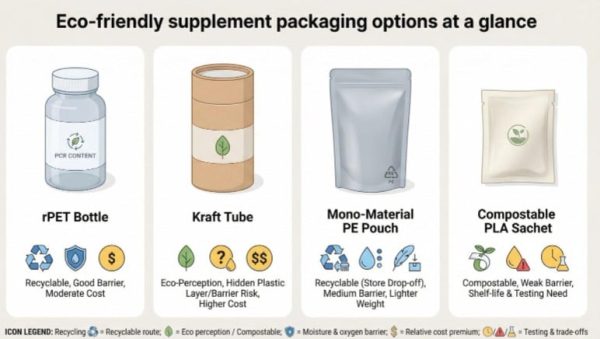
Options keep expanding. Recycled PET bottles fold post-consumer resin into the familiar pill packer, cutting virgin plastic by up to fifty percent without any line change. Kraft paper tubes wrap capsules in a tactile, gift-ready shell that signals “low waste” the moment shoppers touch the fiber surface. Mono-material PE pouches skip the foil layer, so the whole bag slips into store take-back bins.
Trade-offs remain. Compostable PLA films allow more moisture through, so hygroscopic powders require extra desiccant. Paper tubes often hide a thin plastic barrier; failing to disclose that detail draws fast criticism from eco-savvy buyers. Pair every green claim with hard numbers such as recycled content percentage, weight reduction versus last year, or a brief Life Cycle Assessment.
Pricing stands about ten to twenty percent above conventional packs today, yet the marketing upside feels tangible. A recyclable icon on the front panel sparks conversation during in-store demos and supports a premium price that recovers material costs.
Choose eco packaging when the brand promise leans clean, plant-based, or climate-positive, and prepare clear instructions for end-of-life. A QR code that explains how to recycle or compost the pack completes the loop and silences skeptics.
Smart packaging: scan, trust, and share the story
A pill bottle that talks to a phone once sounded futuristic; today QR codes and NFC tags cost pennies, not dollars.
That price shift creates fresh ways to boost trust on crowded shelves. A shopper scans the code and sees the latest third-party lab report. Doubt fades. The same code can register the purchase, unlock dosage reminders, or play a how-to video, extending engagement long after checkout.
Anti-counterfeit value climbs too. Unique serial numbers printed under each cap let customers confirm authenticity in seconds, a safeguard in categories plagued by knock-offs such as weight-loss pills or trendy nootropics. Retail buyers notice that extra layer of security.
Tech adds cost—about twenty cents for an NFC chip or fractions of a cent for a printed QR—yet consider it marketing spend that doubles as quality assurance. Plan the back end carefully; a dead link or slow mobile page drains confidence faster than no code at all.
Adopt smart packaging when the price point supports it and transparency defines the brand story. High-potency formulas, personalized vitamin packs, or anything positioned as clinic-grade gain an instant edge the moment a shopper’s camera lens lights up.
Custom all-in-one kits: packaging as a turnkey growth engine
Sometimes off-the-shelf options fall short. You want a debut that feels like an Apple unboxing merged with apothecary chic. Full-service partners such as Zenpack answer that brief, engineering a package ecosystem—primary bottle, inserts, outer carton, even the e-commerce shipper—in a single engagement.
The upside is coherence. Structural engineers size every compartment so nothing rattles, graphic designers sync colors across substrates, and compliance specialists bake in barcodes, Supplement Facts panels, and child-resistant closures from day one. The result glides through retailer audits that trip many startups.
Shelf impact rises, too. Custom dielines let you stretch height for a taller facing, angle a cut-out window, or add a magnetic flap that invites shoppers to peek inside. Buyers spot that polish and often reserve premium eye-level slots for brands that elevate category aesthetics.
Expect premium costs. Design fees plus tooling for unique molds apply, although smart vendors amortize expensive parts across multiple SKUs to soften the blow. Minimum runs vary, yet digital printing and modular inserts now make three- to five-thousand-unit pilots realistic.
Lead time averages eight to twelve weeks—longer than stock bottles—so map the launch calendar carefully. Many founders find the wait worth it; landing on shelf looking like an established leader often lifts velocity enough to repay the investment by the first reorder.
Choose a custom kit for curated thirty-day wellness programs, multi-bottle bundles, or influencer collaborations where the unboxing doubles as marketing. A strong partner manages the supply-chain choreography, letting you focus on formulas and community, not corrugate and closures.