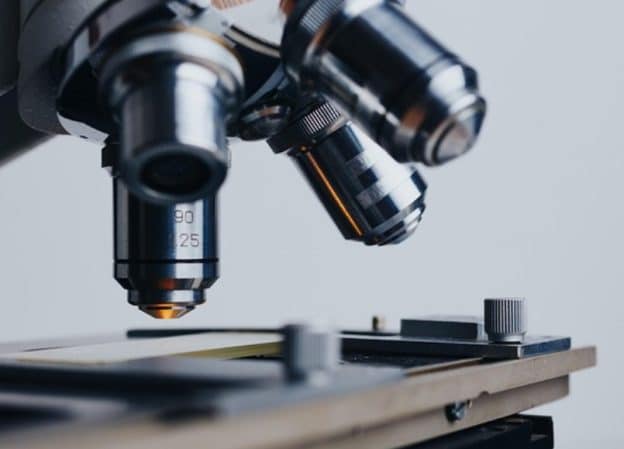
Scientific instruments are among the most resource-intensive products manufactured. A high-performance liquid chromatograph, an electron microscope, or an automated cell counter requires rare materials, precision engineering, and significant energy to produce. Yet in many research institutions, the default approach to aging equipment is replacement rather than extension — driven by budget cycles, grant purchasing incentives, and the assumption that newer is always better for research outcomes. That assumption deserves more scrutiny than it typically gets.
Lifecycle management for laboratory instruments isn’t just a cost question. It’s an environmental one, and institutions that take sustainability seriously are starting to treat equipment longevity as part of that commitment rather than a separate operational concern.
The Environmental Cost of the Replacement Default
Manufacturing scientific instruments generates a substantial environmental footprint that rarely enters the repair-versus-replace calculation. The extraction of rare earth elements for sensors and electronic components, the energy consumed in precision fabrication, and the logistics of global supply chains all contribute to an embedded carbon cost that’s essentially written off when a functioning instrument gets retired prematurely.
Electronic waste from laboratory equipment is a growing problem with limited infrastructure for responsible disposal. Many institutions lack formal e-waste programs for scientific instruments specifically, which means retired equipment often ends up in general waste streams despite containing hazardous materials. The gap between how carefully institutions manage active equipment and how casually they handle end-of-life disposal is striking – and it’s a gap that lifecycle management programs are designed to close.
The calculus changes when you account for the full environmental cost of replacement rather than just the purchase price. An instrument that can be repaired, recalibrated, and returned to service for another five years represents a significantly lower environmental impact than one that gets replaced with a new unit and discarded.
Repair vs. Replacement: Making the Decision With Better Information
The repair-versus-replace decision in most labs is made with incomplete information. The cost of a repair quote is visible and immediate. The total cost of replacement – including procurement time, installation, staff retraining, validation, and the disposal of the retired unit – is diffuse and often underestimated. That asymmetry systematically biases decisions toward replacement when repair would actually be the better outcome on both financial and environmental grounds.
Making this decision well requires a clear picture of each instrument’s service history: how many repairs it has required, what they cost, whether recurring issues suggest a systemic problem or isolated incidents, and how the instrument’s performance compares to current research requirements. The best lab inventory software platforms support exactly this kind of analysis by maintaining complete maintenance logs tied to individual asset records – giving facilities managers the data to evaluate repair history objectively rather than relying on impressions or anecdote.
A few factors that genuinely support a replacement decision include:
- Recurring failures in the same system: Multiple repairs to the same component within a short window suggest underlying degradation that further repairs won’t resolve
- Parts availability: Instruments whose manufacturers have discontinued component support have a hard ceiling on repairability, regardless of condition
- Performance gap: When current research requirements have moved beyond what the instrument can deliver, even in optimal conditions, extension doesn’t serve the science
- Energy consumption: Older instruments sometimes consume significantly more power than current equivalents, making replacement the more sustainable choice over a longer horizon
Strategies That Actually Extend Instrument Lifespan
Preventive maintenance is the most cost-effective lifecycle extension strategy available, and it’s the one most consistently underfunded. Instruments that receive regular calibration, cleaning, and component inspection before failures occur last measurably longer than those that only get attention when something goes wrong. The challenge is that preventive maintenance competes with active research time and rarely has a visible, immediate payoff – which makes it easy to defer until deferral becomes expensive.
Structured training for new users is an underappreciated component of lifecycle management. Instruments fail faster in environments where users aren’t confident in proper operation – incorrect startup sequences, inappropriate sample loading, and improper shutdown procedures all accelerate wear in ways that are invisible until they compound into a significant problem. Institutions that invest in thorough onboarding see the return in maintenance costs over time, even when the connection isn’t always obvious.
What an Institution-Wide Approach Actually Looks Like
Sustainability in laboratory equipment management works best as an institutional commitment rather than a lab-by-lab practice. When individual research groups make independent replacement decisions without visibility into what other groups are retiring, functional instruments get discarded while similar groups are purchasing new ones to meet identical needs. An internal equipment exchange or redistribution program – supported by an accurate, searchable asset inventory – captures value that would otherwise leave the institution entirely.
Procurement policy is the other lever institutions can pull. Grant guidelines that allow equipment purchases often don’t require applicants to demonstrate that suitable instruments aren’t already available within the institution. Building that check into the procurement process, rather than leaving it to individual researchers, changes the default from buy-new to use-what-exists when that option is genuinely available.