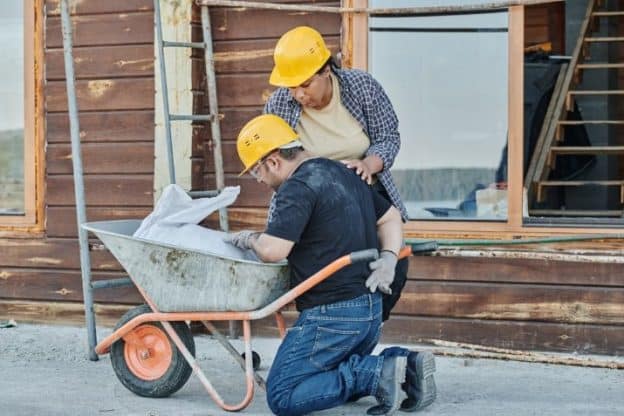
Construction sites are risky places to work.
But when an employee is injured on the job, the consequences can destroy a contracting company. Lawsuits, increased insurance rates, OSHA fines and lost production can turn one serious accident into years of lost profits. That’s why minimizing construction injury liability shouldn’t just be a safety issue – It should be every contractor’s business plan.
The good news?
Reducing liability is easier than most contractors realize. Put the proper systems, training and legal protection in place and you can keep both your crew and your bottom line safe.
What’s inside this guide:
- Why Construction Injury Liability Matters
- The True Cost Of Workplace Injuries
- 5x Ways To Reduce Construction Injury Liability
- Building A Long-Term Safety Culture
Why Construction Injury Liability Matters
Construction is one of the most dangerous industries in America.
There were 1,032 construction fatalities in 2024 according to the Bureau of Labor Statistics. That’s more than any other occupational group. Non-fatal injuries reach into the hundreds of thousands each year.
Here’s the thing:
Every workplace accident has the potential to become a lawsuit. Injured workers and third parties can bring workers’ comp claims, personal injury claims, and OSHA violations simultaneously against contractors. That’s why proactive contractors retain a construction accident attorney ASAP. An experienced law firm like this Pennsylvania Construction Injury Lawyer can help you understand how quickly liability for a workplace injury can escalate from one incident.
Reducing that risk starts with understanding what you’re up against.
The True Cost Of Workplace Injuries
Most contractors underestimate how expensive a single injury really is.
The most direct costs are clear-cut: medical expenses, workers’ comp claims, and legal expenses. However, there are several hidden costs that are far uglier. They include:
- Lost productivity while incident investigations happen
- Higher insurance premiums for years to come
- Reputation damage that costs future contracts
- A drop in employee morale after a serious accident
- Time and money spent training replacement workers
Then there’s the whole OSHA aspect to consider. Fall Protection is the most-cited OSHA standard year after year in construction, and the fines for each violation are steep. Citations begin to add up quickly if you receive multiple citations for one incident.
Combine all of that, and it can take one terrible day down on the job to close a small contractor’s doors.
That’s why prevention pays for itself.
5x Ways To Reduce Construction Injury Liability
Now on to the fun stuff – eliminating liability. These five tips work together to help protect yourself from expensive claims.
Take Fall Protection Seriously
Falls are the leading cause of death in construction. When a worker falls off a scaffold, roof or ladder without proper fall protection, the contractor is almost certainly at fault.
Here’s what a strong fall protection program looks like:
- Guardrails, safety nets, or personal fall arrest systems on every elevated surface that is over 6 feet above ground
- Regular inspections of harnesses, lanyards, and anchor points
- Documented training for every worker who operates at height
- Clear rescue plans for when a fall does happen
Skipping any of these steps is the fastest way to end up in court.
Document Everything
If it isn’t written down, it didn’t happen.
That’s what happens when workers comp liability cases go before a jury. Contractors who maintain good safety documentation have a huge edge against those who fail to do so. Documentation should consist of:
- Toolbox talks and daily safety briefings
- Equipment inspection logs
- Incident reports (yes – even minor near-misses)
- Employee training certifications
- Site visitor logs
Good documentation shows that you took reasonable care. And that’s often the difference between winning AND losing a case.
Invest In Proper Training
Untrained workers get hurt more often. It really is that simple.
All members of the crew should be trained on job-specific hazards prior to arriving on site. This includes new employees, subcontractors, and journeymen in the trades that may be using tools they are not familiar with.
Training should cover:
- Site-specific hazards
- Equipment operation
- Emergency procedures
- Reporting near-misses
Refresher courses matter too. Skills fade over time and safety standards keep getting updated.
Vet Your Subcontractors
Injuries to Subcontractors can fall on the General Contractor. That is a massive liability blind spot for contractors.
Before contracting make sure every sub has their own workers’ comp insurance as well as general liability insurance. Require:
- Certificates of insurance
- OSHA training records
- Safety history and past citations
- Written site safety plans
Just one uninsured subcontractor on site can create huge liability exposure for the GC if there’s an accident.
Build A Relationship With A Construction Accident Lawyer
Waiting until an accident happens is too late.
Smart contractors already have lawyers standing by waiting for you to have a problem. Here’s how a competent construction accident lawyer can help you:
- Review contracts for liability language
- Advise on OSHA compliance
- Handle claims quickly when incidents happen
- Represent the business if a lawsuit is filed
The front-end investment is minimal when you compare it to trying to find a lawyer after you’ve been involved in a major accident. Consider it as insurance for the legal aspect of your business.
Building A Long-Term Safety Culture
None of the strategies above work as one-off fixes.
Decreasing your liability for construction injuries involves instilling safety as the norm, rather than the outlier. If each worker on-site has an ingrained sense of safety before anything else, there will be fewer accidents, claims, and insurance costs.
That kind of culture takes time to build.
You also need buy-in from leadership. When project managers, supervisors, and owners care about safety, the workers will too. When leadership makes safety an afterthought… everyone else does too. It really is that simple.
To build a lasting safety culture, contractors should:
- Hold regular safety meetings (weekly, not monthly)
- Reward safe behavior on-site
- Investigate every near-miss like a real incident
- Make safety a part of every hire’s onboarding
Little changes add up. And a secure site will nearly always mean a money-making site.
The Bottom Line
Construction injury liability is one of the biggest hidden risks in the contracting business.
One accident can cause workers’ comp claims, personal injury lawsuits and OSHA penalties. Combine all three, and you’ve got a disaster. Fortunately, it doesn’t have to happen that way. Contractors who focus on fall protection, documentation, training, subcontractor screening and legal support experience far fewer accidents with much less liability exposure.
The math is simple:
- Prevention costs money upfront
- Litigation costs way more later
To scale your contracting business, you must view safety as a competitive edge – not simply a regulatory requirement. Implement the 5x tactics listed above, cultivate a culture of safety and workplace injury liability becomes a calculated risk rather than a business-ending liability.